
Home >> About us >> About the University
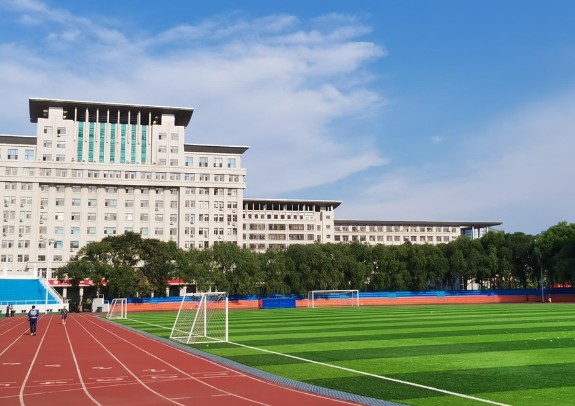
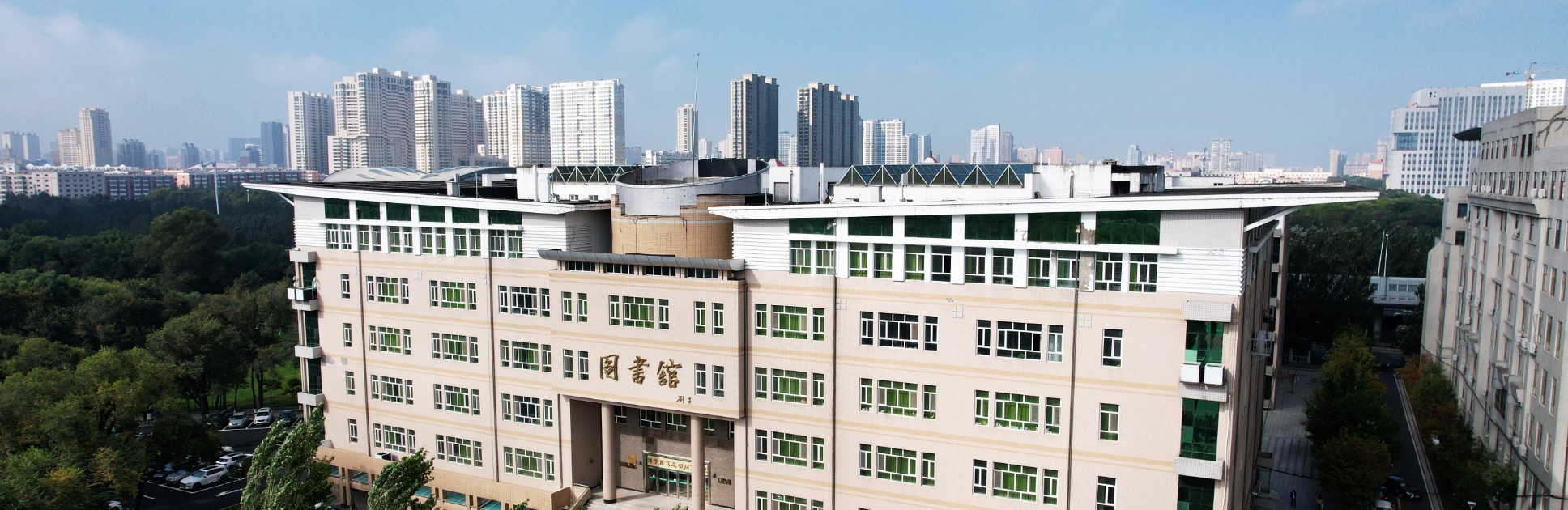
Northeast Forestry University is a research-oriented institution distinguished by its strong focus on forestry disciplines, including forest science and forestry engineering. It is committed to advancing ecological civilization and green productivity, with a mission to safeguard lucid waters and lush mountains and to strengthen the ecological security barrier in northern China. The university is known for interdisciplinary integration and innovation. Located in Harbin, at the center of China’s largest state-owned forest region, the campus spans 136 hectares. The university also operates several teaching, research, and fieldwork bases, including the Mao’ershan Experimental Forest Farm (Mao’ershan National Forest Park) and the Liangshui Experimental Forest Farm (Liangshui National Nature Reserve), which together cover 33,000 hectares.
Founded in July 1952 as Northeast Forestry College, the university drew on the Departments of Forestry from Zhejiang University’s College of Agriculture and Northeast Agricultural College. It was originally administered directly by the former Ministry of Forestry. In August 1985, it was renamed Northeast Forestry University. In February 2000, the university’s administration was transferred from the former State Forestry Administration to the Ministry of Education. In October 2005, with approval from the National Development and Reform Commission, the Ministry of Finance, and the Ministry of Education, the university was designated a key university under China’s “Project 211.” In November 2010, the Ministry of Education and the former State Forestry Administration signed an agreement to jointly support the university. In June 2011, the university was selected as a key university under the national “Innovative Platform for Advantageous Disciplines” program. In March 2012, the Ministry of Education and the People’s Government of Heilongjiang Province signed a co-development agreement. In September 2017, with approval from the State Council, the university was included in China’s “Double First-Class” initiative. In February 2022, it was selected for the second round of the national “Double First-Class” initiative.
The university currently has more than 30,000 students, including 20,006 full-time undergraduates and 11,202 graduate students. It employs more than 2,500 staff members, of whom 1,575 are full-time faculty.
Among its academic staff are one member of the Chinese Academy of Engineering and one member of the Chinese Academy of Sciences. A total of 53 person-times have been selected for national-level talent programs. 25 experts receive special government allowances from the State Council, and 14 receive special allowances from the Heilongjiang Provincial Government. The university also has one national-level young and middle-aged expert with outstanding contributions and five such experts at the provincial or ministerial level. In addition, it hosts two “Huang Danian–style” teaching teams at Chinese universities, five forestry and grassland science and technology innovation teams under the National Forestry and Grassland Administration, and nine leading provincial professional and technical talent teams.
In recent years, the university has been home to one National Model Teacher for Teaching and Educating, five National Distinguished Teaching Masters, six National Outstanding Teachers, three National Model Teachers, and one National Advanced Worker in the Education System. It has also produced four National Forestry and Grassland Teaching Masters, one team awarded the National Worker Pioneer title, two recipients of the National May 1st Labor Medal, one National March 8th Red Banner Pacesetter, one National Women’s Exemplary Figure, one National Outstanding Grassroots Theoretical Lecturer, and one recipient of the National New Era Youth Pioneer Award. At the provincial level, there are three model workers, 29 distinguished teaching masters, nine outstanding teachers (person-times), two model teachers, five recipients of the Provincial May Fourth Youth Medal, and two individuals recognized as “Good People of Longjiang.”
The university comprises a Graduate School, 22 colleges, one teaching department, and the Hainan International College. It offers 71 undergraduate programs, including 26 national first-class undergraduate program development sites. It has 9 first-level doctoral degree programs and 2 professional doctoral degree programs, 18 first-level master’s degree programs, and 19 categories of professional master’s degree programs. In addition, it operates 10 postdoctoral research stations and one postdoctoral research workstation.
The university boasts two disciplines selected for world-class development—forestry engineering and forestry—as well as four designated for national first-class development: biology, ecology, landscape architecture, and agricultural and forestry economic management. It has 3 national key first-level disciplines, 11 national key second-level disciplines, 8 key disciplines designated by the National Forestry and Grassland Administration, 2 key (cultivated) disciplines under the same administration, 1 key discipline cluster in Heilongjiang Province, and 7 provincial key first-level disciplines.
Seven disciplines—plant and animal science, agricultural science, environment and ecology, chemistry, materials science, engineering, and biology and biochemistry—rank among the top 1% globally in the Essential Science Indicators (ESI). The university has gradually developed a distinctive disciplinary system that integrates forestry engineering with other fields, is supported by the fundamental sciences, enriched by the humanities, and coordinated with agriculture and forestry.
It hosts a National Life Science and Technology Talent Training Base, jointly approved by the National Development and Reform Commission and the Ministry of Education, and a National Base for Fundamental Scientific Research and Teaching Talent Training in Biology, approved by the Ministry of Education. The university is also a pilot institution for national education system reform, a pilot university for the national programs to educate outstanding engineers and outstanding agricultural and forestry talents, a demonstration university for deepening innovation and entrepreneurship education, and a national base for innovation and entrepreneurship in practical education.
The university boasts well-established teaching and research platforms as well as practical training bases. It is home to the National Key Laboratory of Forest Tree Genetics and Breeding (Northeast Forestry University), the National Key Laboratory of Woody Oil Resource Utilization (Northeast Forestry University), the National and Local Joint Engineering Laboratory for Ecological Utilization of Biological Resources, and the Mao’ershan Forest Ecosystem National Field Scientific Observation and Research Station in Heilongjiang. It operates four key laboratories under the Ministry of Education, focusing on forest plant ecology, biomass materials science and technology, the restoration and reconstruction of saline-alkali vegetation in Northeast China, and the sustainable management of forest ecosystems. The university also hosts five key laboratories of the National Forestry and Grassland Administration, the Felid Research Center, 16 key laboratories in Heilongjiang Province, and five provincial international cooperation laboratories. In addition, it has two engineering research centers under the Ministry of Education and two discipline innovation and talent introduction bases for higher education institutions. The university operates three national-level experimental teaching demonstration centers (forestry, forest engineering, and wildlife), two national virtual simulation experimental teaching centers (forest engineering and wildlife), and six provincial-level experimental teaching demonstration centers. It also includes two field scientific observation and research stations under the Ministry of Education and four ecosystem positioning research stations under the National Forestry and Grassland Administration. In the humanities and social sciences, it hosts three provincial research bases for philosophy and social sciences, six key research bases for humanities and social sciences in higher education institutions, and two provincial think tanks. Furthermore, the university has three long-term research bases approved by the National Forestry and Grassland Administration, as well as specialized facilities, including the Wildlife and Plant Testing Center and the Engineering Quality Supervision and Testing Center, both of which are under the same administration. It has established one overseas innovation and practice base for graduate students, one national-level demonstration base for joint professional degree training, and 218 off-campus graduate innovation and practice bases.
In 2020, the Mao’ershan Experimental Forest Farm, Liangshui Experimental Forest Farm, and the Forest Museum were selected as part of the fifth batch of national forestry and grassland science popularization bases. The Forest Museum was also upgraded to a “National Second-Class Museum.” In 2021, the university established the Northeast Asia Biodiversity Research Center and the Carbon Neutrality Technology Innovation Institute.
The university actively promotes international exchange and cooperation, having established inter-institutional partnerships with more than 100 universities and research institutions across nearly 30 countries and regions. Each year, nearly 300 experts and scholars from overseas, as well as from Hong Kong, Macao, and Taiwan, visit the university for lectures, collaborative research, and academic exchanges. Meanwhile, over 100 faculty members are sent abroad annually to pursue degrees, undertake academic visits, or engage in research collaboration. The university also offers a wide range of student exchange programs with partner institutions in countries and regions such as Russia, New Zealand, the United Kingdom, France, the United States, Canada, Australia, South Korea, and Japan. It also actively sponsors students to study abroad through national scholarship programs.
The university has established Sino-foreign cooperative education institutions and programs in collaboration with the University of Auckland in New Zealand, Aston University in the United Kingdom, and Birkbeck, University of London. In May 2024, it founded the Hainan International College within the Lingshui Li’an International Education Innovation Pilot Zone in Hainan Province. Through the integrated development of Sino-foreign cooperative education institutions and programs, an international credit transfer center, and joint research institutes, the university aims to build an important platform and gateway for international exchange.
In recent years, the university has hosted major international academic conferences, including the International Symposium on Forest Molecular Biology and Biotechnology and the International Symposium on Transboundary Conservation of Tigers and Leopards. It has also strengthened the education and training of international students. As a designated institution for the Chinese Government Scholarship, the university has cultivated numerous outstanding international students from more than 100 countries on five continents.
In 2007, the university received an “Excellent” rating in the national evaluation of undergraduate teaching quality. It was named a “National Civilized Unit” by the Central Commission for Guiding Cultural and Ethical Progress in 2011, 2014, and 2017. In 2020, it was honored as a “National Civilized Campus” for the first time, and in 2025 it passed the re-evaluation and retained the title. The university has also been recognized as a provincial-level civilized unit for 16 consecutive years. In 2021, its Party Committee was awarded the title of “Advanced Primary-Level Party Organization of Heilongjiang Province.”
In recent years, the university has been recognized as a National Ecological Civilization Education Base, a National Model Staff Home, an Advanced Collective in Teachers’ Ethics Development, a National Model Unit for Afforestation, and a recipient of the 7th and 10th “Mother River Award.” It has also been honored as an Advanced Unit in Student Financial Aid in Chinese Universities, a National May Fourth Red Flag Youth League Committee and Youth League Branch, and an Outstanding Project Office for the National College Student Volunteer Service Program in Western China. At the provincial level, it has received numerous honors, including the Heilongjiang May 1st Labor Award, Top Ten Harmonious Campus, March 8th Red Banner Unit, Advanced Collective in Confidentiality Work, Advanced Collective in Patriotic Education, Advanced Unit in Legal Publicity and Education, Advanced Unit in Conscription Work, Advanced Collective in Military-Police-Civilian Cooperation, Advanced Collective in Student Affairs, one of the first Demonstration Centers for Mental Health Education in Higher Education Institutions, and one of the first Model Universities for Law-Based Governance in Heilongjiang Province. The university has also been recognized 23 times as a National Advanced Unit for College Student Social Practice.
In 2020, the university hosted the 12th “Challenge Cup” Chinese College Student Entrepreneurship Plan Competition, winning the “Excellence Cup” with a record of 2 gold, 1 silver, and 5 bronze medals. In 2023, it hosted the 2nd China Graduate “Dual-Carbon” Innovation and Creativity Competition and won the overall championship. Since the 12th Five-Year Plan period, the university has received 765 scientific research awards at various levels, including 6 Second Prizes of the National Science and Technology Progress Award and 328 provincial- and ministerial-level research awards (including 29 First Prizes). It has also been granted 1,725 invention patents. In 2014, 2018, and 2022, the university won a total of four Second Prizes of the National Teaching Achievement Award.
The university has long upheld perseverance and dedication to serving the nation through ecological advancement. It remains committed to its founding mission of “educating talents for the Party and the country,” adheres to the motto “Learning in Harmony with Heaven and Earth, Virtue in Unity with Nature,” and follows the educational philosophy of “cultivating both moral character and academic excellence, nurturing both trees and people.” It promotes the “Donglin spirit” with “striving” at its core, fosters a school ethos of “rigor, diligence, pragmatism, and innovation,” and pursues the vision of “adorning the nation’s landscapes and painting the land into a splendid tapestry.” With a distinctive culture of “educating through forestry,” the university has, for more than 70 years, rooted itself in China’s soil, stood firm on the northern frontier, devoted itself to green mountains and clear waters, and contributed to ecological civilization. Over the decades, it has trained a large number of high-level professionals for society and produced many outstanding talents, including national and provincial leaders, members of the Chinese Academy of Sciences and the Chinese Academy of Engineering, and leading figures in academia and industry. It has also nurtured more than 200,000 distinguished graduates, including the builders of the Saihanba Forest Farm, the young team of the Yinggeling Nature Reserve, and Xu Xiujuan, China’s first officially recognized environmental martyr. These graduates have made significant contributions to forestry education, ecological civilization, and the country’s economic and social development.
The university upholds the leadership of the Communist Party of China, accelerates high-quality development, and actively serves national strategies and regional development needs. It continues to strengthen its institutional advantages and highlight its distinctive characteristics. Guided by the “two-step” development strategy set forth at the university’s 14th Party Congress, it strives to become a world-class university with Chinese characteristics, distinguished by its strengths in forestry.
Tel: +86-451-82190881
Fax:+86-451-82190376
E-mail:nefu_gjhzc@163.com
Tel: +86-451-82192455
Fax:+86-451-82192454
E-mail:SIEE@nefu.edu.cn
 CN
CN