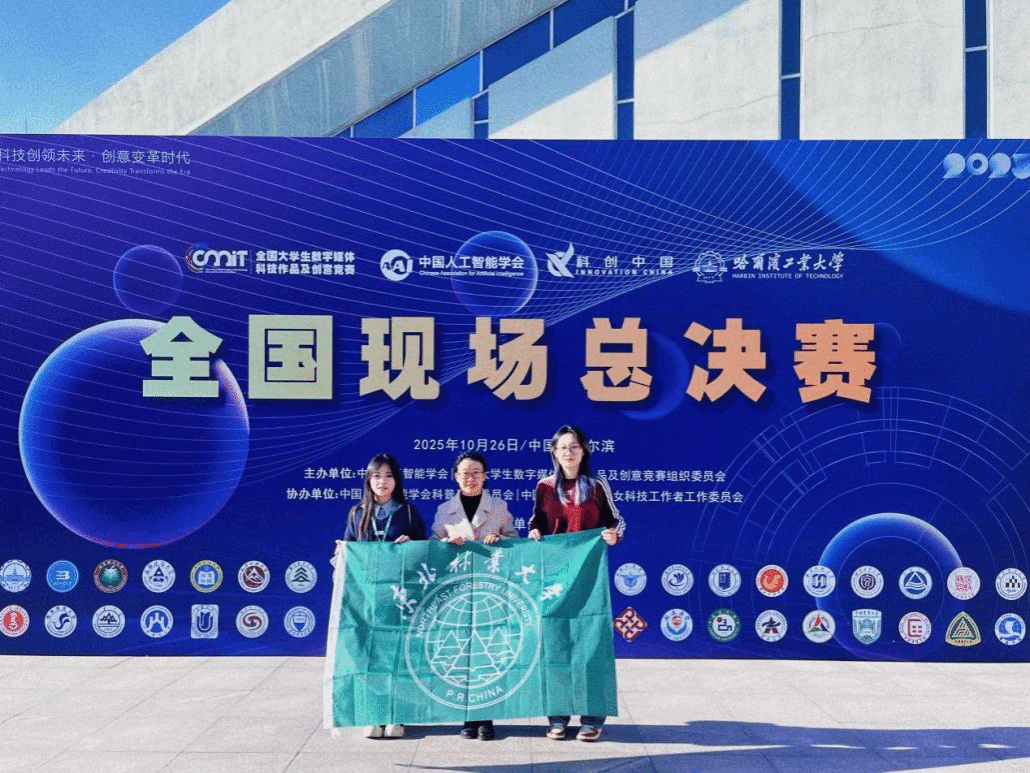
Recently, the 2025 National Finals of the 13th National College Student Digital Media Technology and Creativity Competition, organized by the Chinese Association for Artificial Intelligence and the Competition Committee, concluded successfully at Harbin Institute of Technology. The team project “Qunli Filtered World · Smart Future,” developed by Zhang Kejia of NEFU’s School of Forestry, Sun Yiwen of Harbin Institute of Technology, and Song Bingxin of Dalian University of Technology, stood out among 170,000 entries nationwide and won First Prize in the national finals. Their supervisor, Zhang Min, was honored with the title of “Outstanding Instructor.”
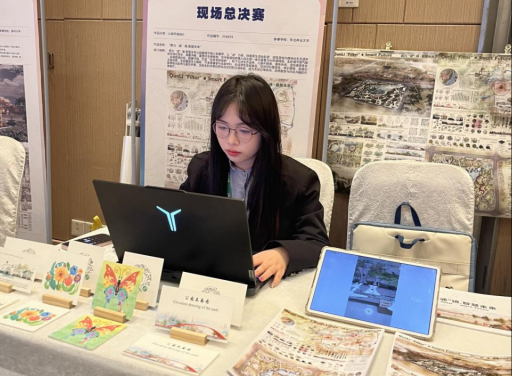
The project centers on “filtration,” integrating urban ecological filtration systems with innovative city technologies to create a futuristic urban park that combines stormwater management, air purification, wildlife habitats, interactive experiences, and science education. The design features innovative, multi-layered ecological filtration belts, breathable pavements, intelligently monitored vegetation modules, and interactive light-and-shadow installations to enable on-site rainwater absorption, graded pollutant purification, and microclimate self-regulation. Leveraging AI sensing and an AR display platform, the project transforms “invisible” ecological processes into immersive, visible landscapes, allowing citizens to experience nature during recreation and understand sustainable principles through interaction. Beyond significantly reducing regional runoff coefficients and enhancing biodiversity, the project activates community engagement through open, educational spaces. It provides a replicable, scalable, and iterative “smart ecological filter” model for high-density urban renewal. It exemplifies the social value of public landscapes and demonstrates the imaginative potential of future digital-intelligent landscapes.
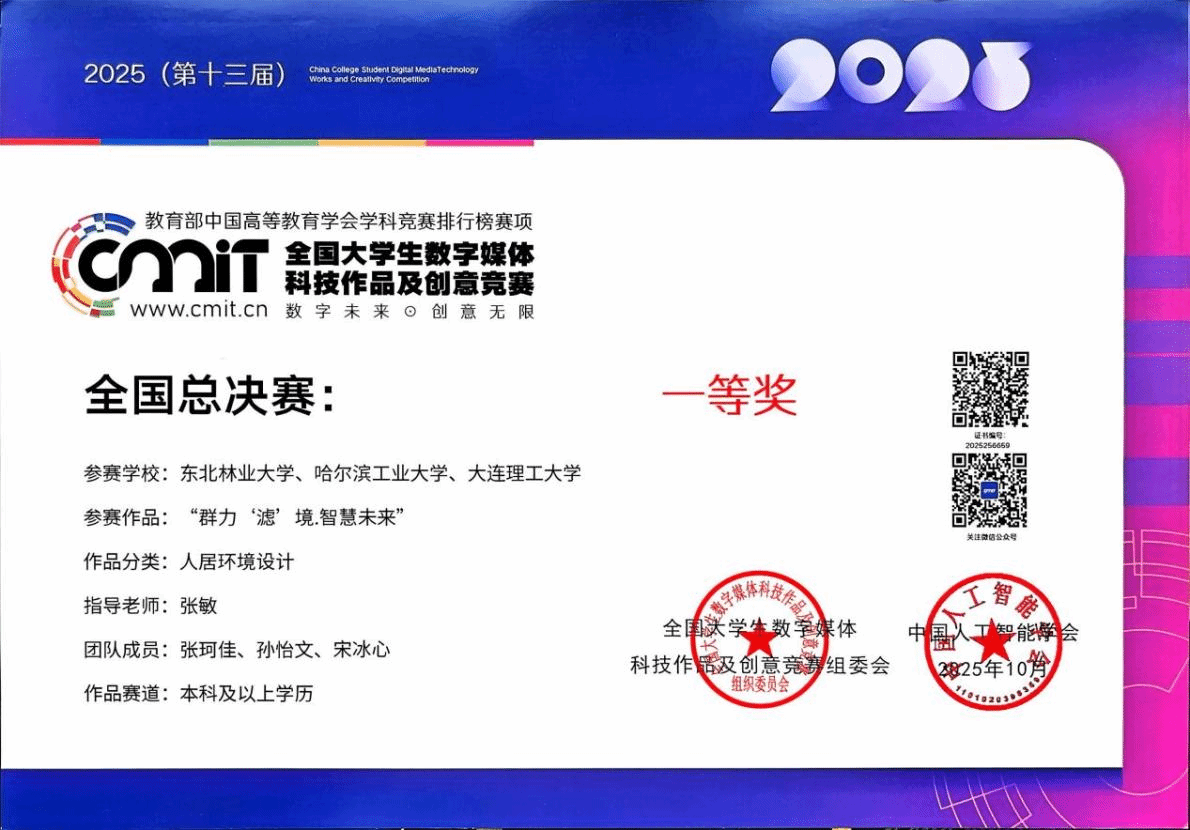
The National College Student Digital Media Technology and Creativity Competition is listed among the Chinese Association of Higher Education’s disciplinary competition rankings and recognized by the Ministry of Education as one of the nation’s official academic competitions. This edition was jointly organized by the Chinese Association for Artificial Intelligence and the Competition Committee of the National College Student Digital Media Technology and Creativity Competition, with support from the Popular Science Working Committee of the Chinese Association for Artificial Intelligence and other organizations. The event was co-hosted by 54 universities, including Harbin Institute of Technology, and attracted over 500,000 students and faculty from more than 500 universities nationwide, resulting in 170,000 entries. The international track received over 2,300 submissions from students and faculty at more than 50 universities across six continents. After multiple rounds of intense competition, more than 1,900 teams, comprising over 4,800 domestic and international participants, advanced to the national finals.

 CN
CN