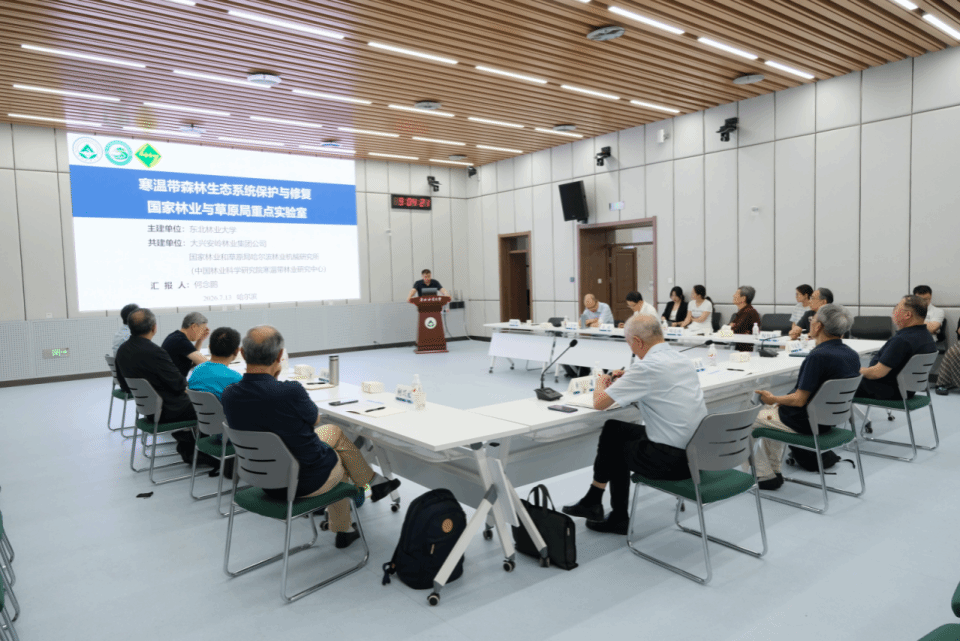
On July 13, NEFU hosted the First Symposium on the Conservation and Restoration of Cool Temperate Forest Ecosystems in Harbin. Renowned experts and scholars from universities and research institutions across China gathered to discuss fundamental theories, key technologies, and practical applications for conserving and restoring these ecosystems. The symposium also addressed major scientific challenges and future research directions for protecting and restoring China’s cool temperate forests.
During the symposium, Professor He Nianpeng of NEFU presented the strategic plan and development vision for the National Forestry and Grassland Administration Key Laboratory of Conservation and Restoration of Cool Temperate Forest Ecosystems. The laboratory will focus on the structure and functioning of cool temperate forest ecosystems, the development of conservation and restoration technologies, and pathways to realize the value of forest carbon sinks. It aims to establish an integrated ecological restoration framework that integrates multi-scale monitoring, precision conservation, and sustainable forest management, providing robust scientific and technological support for the high-quality conservation and green development of cool temperate forests.
Professor He’s presentation sparked lively discussion among participants. Academician Ma Keping of NEFU, Professor Sheng Lianxi of Northeast Normal University, and Professor Han Xingguo of Hebei University, along with other experts, offered valuable strategic recommendations for the laboratory’s future development, providing important guidance for its continued development and growth.
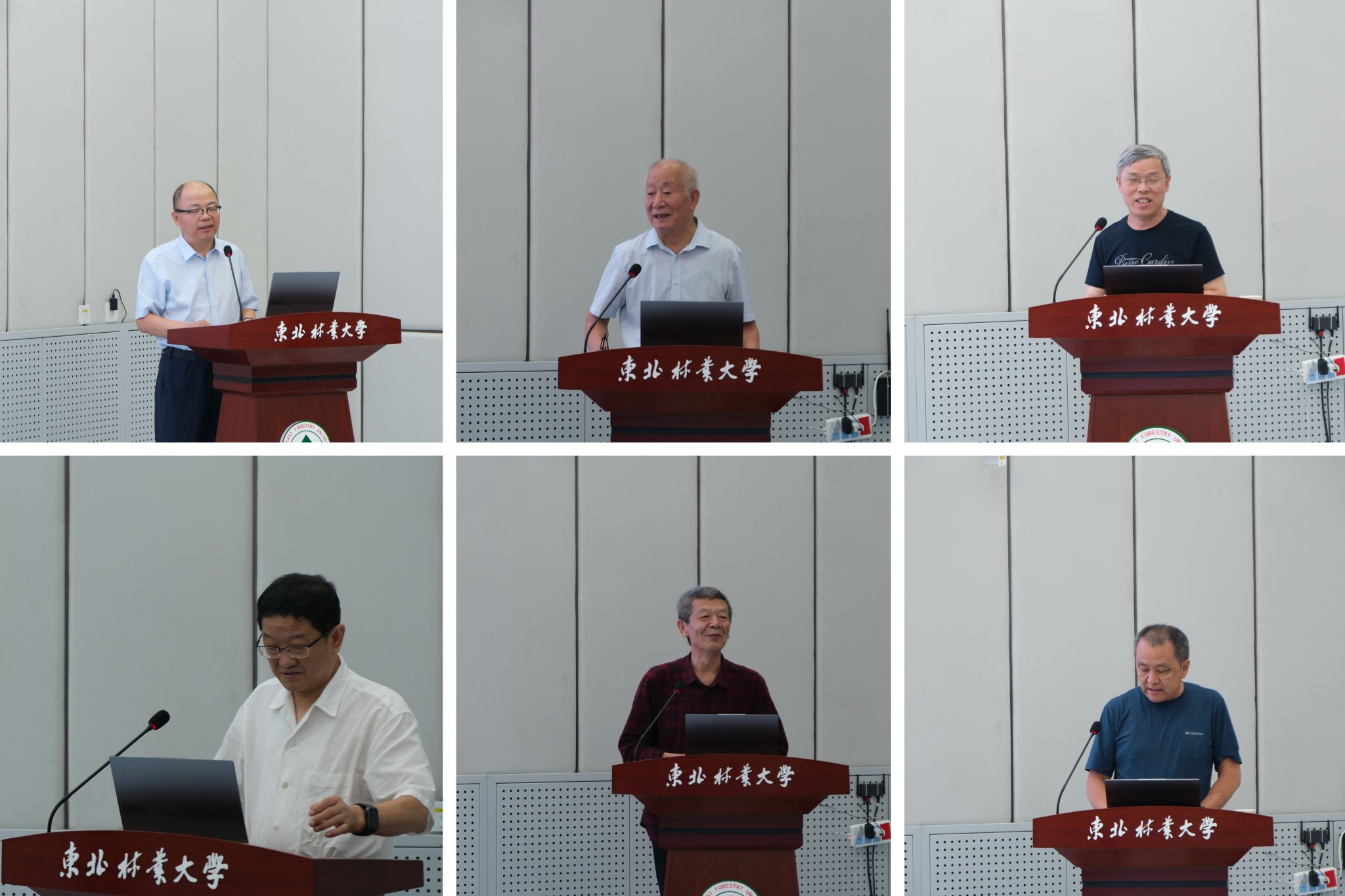
The symposium also featured a series of invited presentations by leading experts: Research Professor Yu Jinghua of the Shenyang Institute of Applied Ecology, Chinese Academy of Sciences, presented strategies to enhance China’s forest food production capacity and examined their practical implications for ecological restoration in the Greater Khingan Mountains. Professor Jiang Yong of Hebei University focused on forest soils, providing an in-depth analysis of the ecological mechanisms governing soil organic matter sequestration and decomposition. Professor Han Xingguo of Hebei University explored innovative models for collaboration and division of responsibilities within ecological research teams in the era of artificial intelligence. Research Professor Zhou Daowei of the Northeast Institute of Geography and Agroecology, Chinese Academy of Sciences, proposed an integrated grassland management approach that combines fertilization with a “half-grazing, half-mowing” strategy to improve the efficiency of grass–livestock systems. Research Professor Huang Jianhui of the Institute of Botany, Chinese Academy of Sciences, comprehensively examined the cascading effects of grazing on plant communities, soil microenvironments, and ecosystem functioning. Research Professor Xie Zongqiang, also of the Institute of Botany, Chinese Academy of Sciences, reviewed the background, methodology, progress, and future challenges of compiling the Vegetation of China.
The successful symposium marks another concrete step in NEFU’s efforts to support China’s national strategies for ecological security and ecological civilization. Looking ahead, NEFU will continue to leverage its disciplinary strengths to advance fundamental research, drive technological innovation, and translate scientific achievements into practical applications. Through these efforts, NEFU aims to achieve breakthroughs in the conservation and restoration of cool-temperate forest ecosystems, strengthen the ecological security barrier of Northeast China’s forest region, and provide Northeast Forestry University’s expertise and solutions to build a Beautiful China.

 CN
CN