As the 50th International Museum Day approaches, in response to this year’s theme, “Museums: Bridging Worlds,” the China (Harbin) Forest Museum, in collaboration with the College of Landscape Architecture, has launched the special exhibition “Miniature Landscapes of NEFU, Blossoms Preserved Through Time,” featuring miniature landscapes and pressed-flower art. The exhibition is free for students, faculty, and the general public.
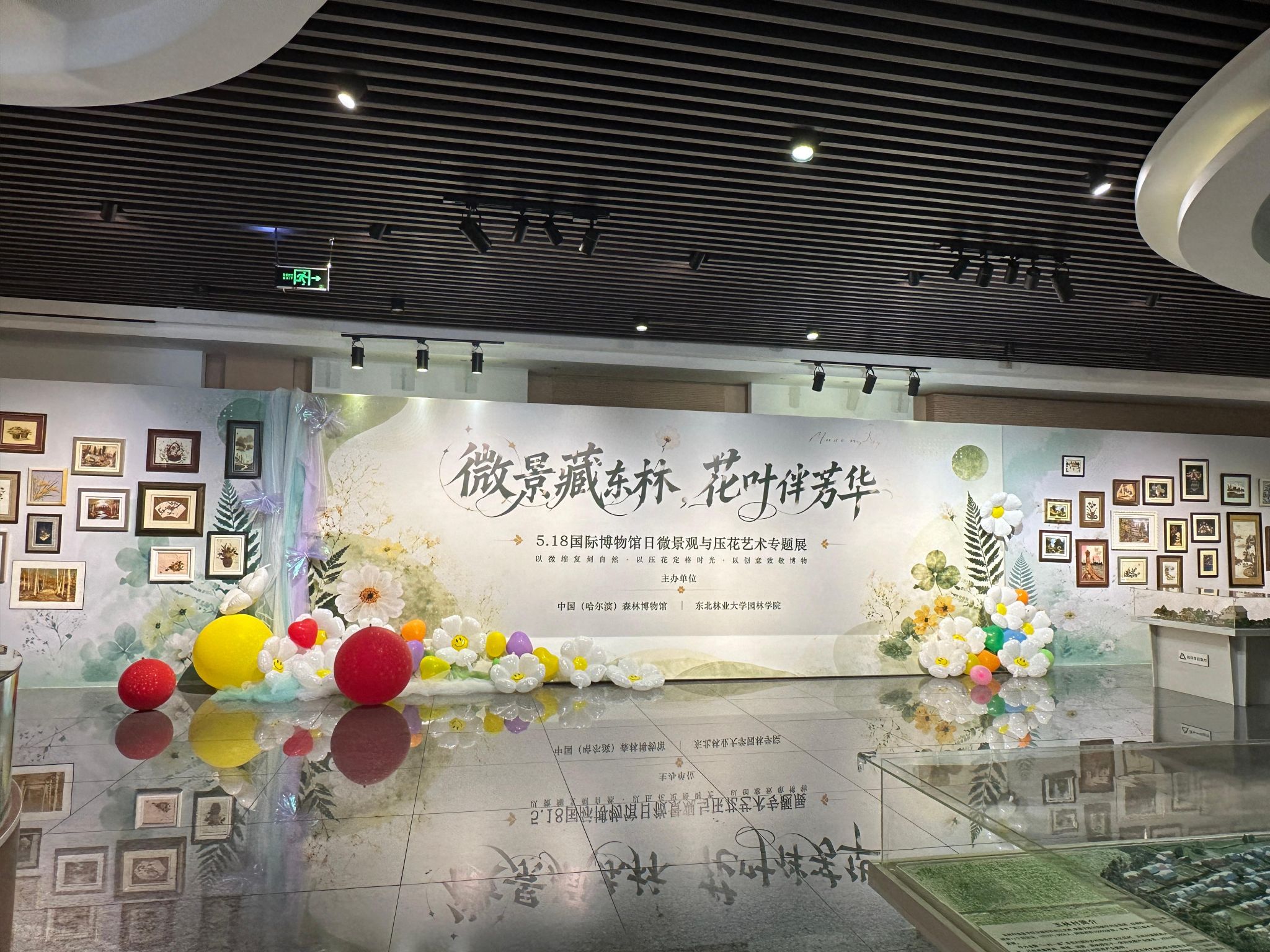
Centered on the concept of “recreating nature in miniature, preserving moments through pressed flowers, and celebrating museum culture through nature-inspired craftsmanship,” the exhibition comprises four major sections—miniature landscapes, landscape design proposals, nature-based handicrafts, and pressed-flower artworks—along with several thematic display areas. Together, these sections showcase the teaching and research achievements of the College of Landscape Architecture’s faculty and students.
The “Miniature Landscapes” section showcases exemplary projects that demonstrate university–local government collaboration to support regional development. By combining traditional craftsmanship with contemporary design thinking, the exhibits explore the theme of family culture. Through scenes inspired by wishes for prosperity, neighborhood harmony, longevity, and abundance, these compact landscape compositions vividly capture the distinctive character of Northeast China and the warmth of family life. The “Miaolin Flower Sea” Rural Integrated Development Complex model offers a visual representation of rural revitalization planning and highlights achievements in industry–education integration within higher education.
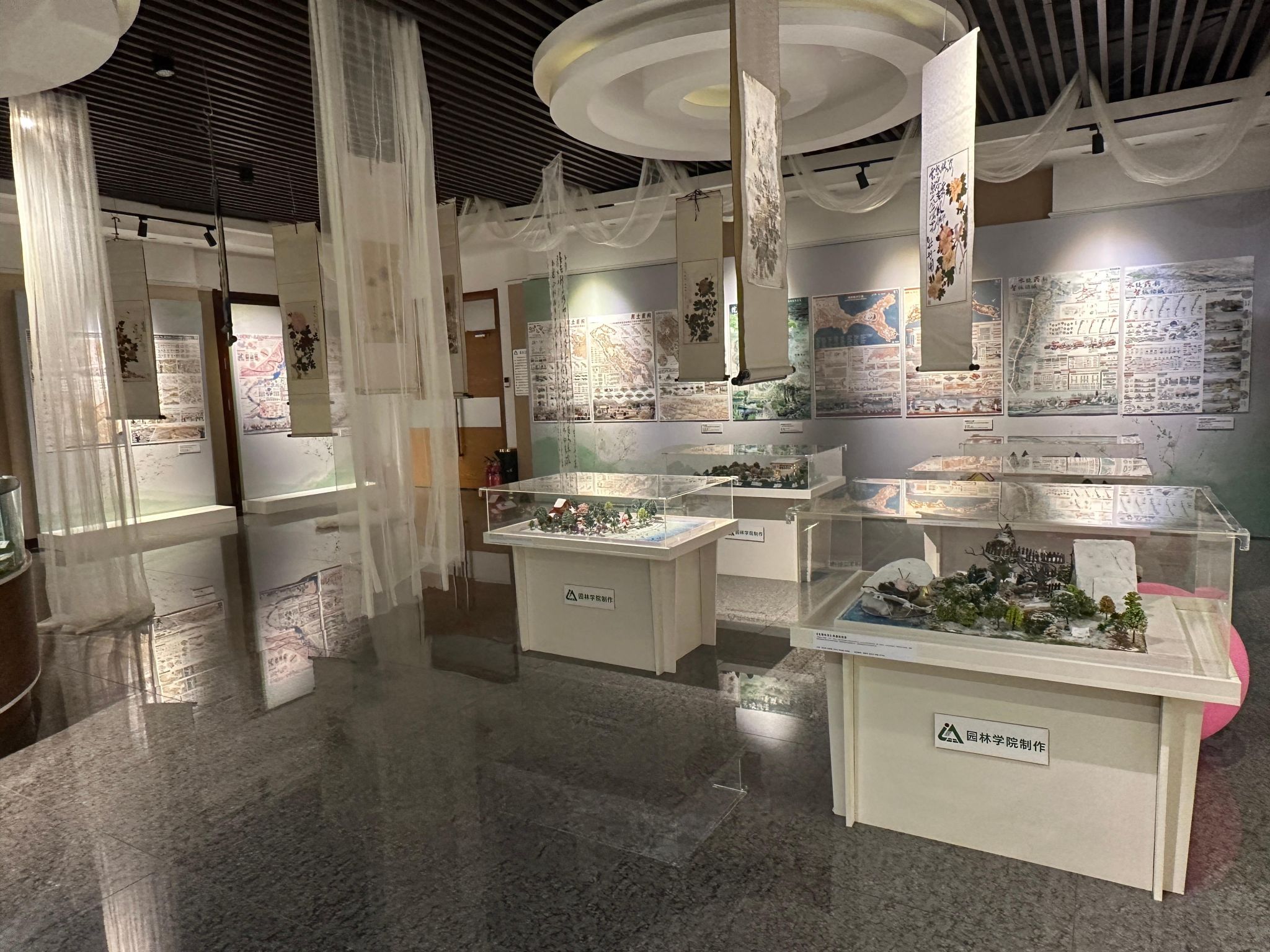
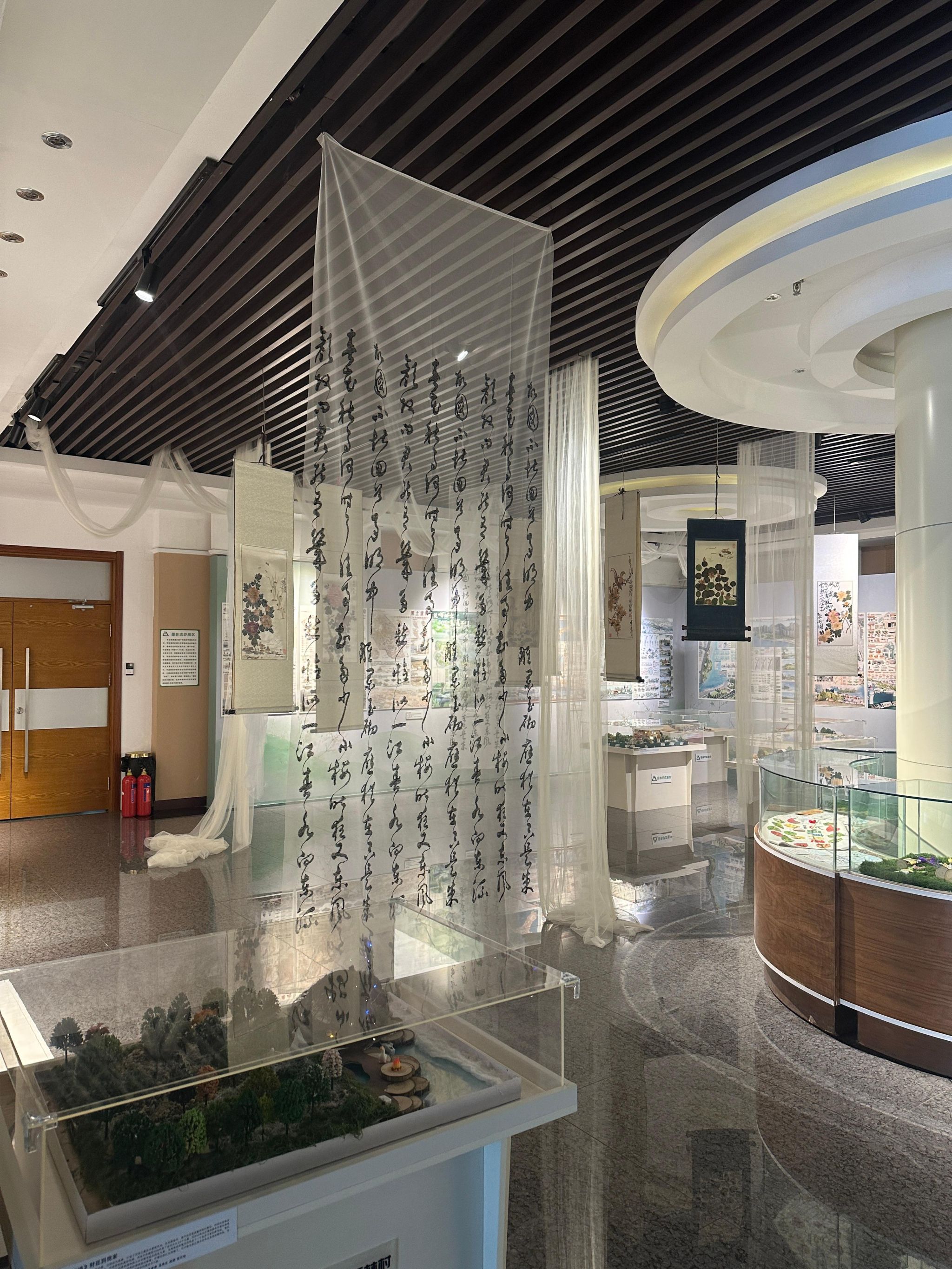
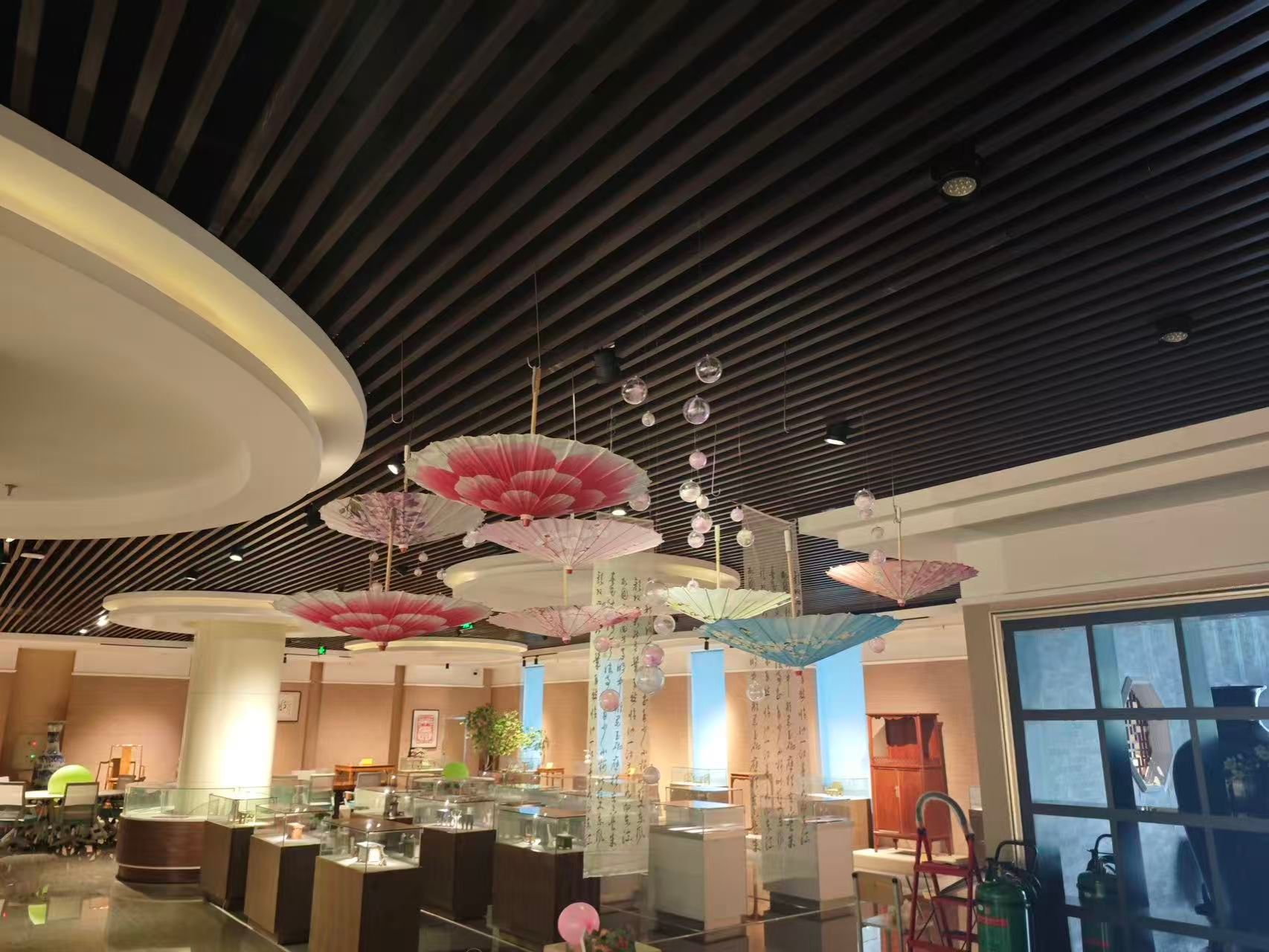
The “Ink Shadows and Flowing Veils” section departs from conventional flat exhibition formats. Lightweight, translucent fabrics are interwoven with award-winning entries in landscape architecture competitions and scroll-format pressed-flower artworks, all suspended gracefully in midair. Featured works include recipients of prestigious awards from the International Federation of Landscape Architects (IFLA), Milan Design Week, the Future Designer Competition, and the National Landscape Architecture Education Conference, as well as outstanding graduation projects. Whether addressing urban ecological planning at a macro scale or flower-border design at a more intimate scale, the creators skillfully integrate scientific analysis, artistic expression, and humanistic values. The semi-transparent veils serve as fluid spatial partitions, making the artworks appear almost alive amid shifting light and shadow. As visitors move through the space, they embark on an immersive journey akin to walking through a three-dimensional ink-painting scroll, appreciating the poetic aesthetics of Eastern art, where reality and imagination intertwine.
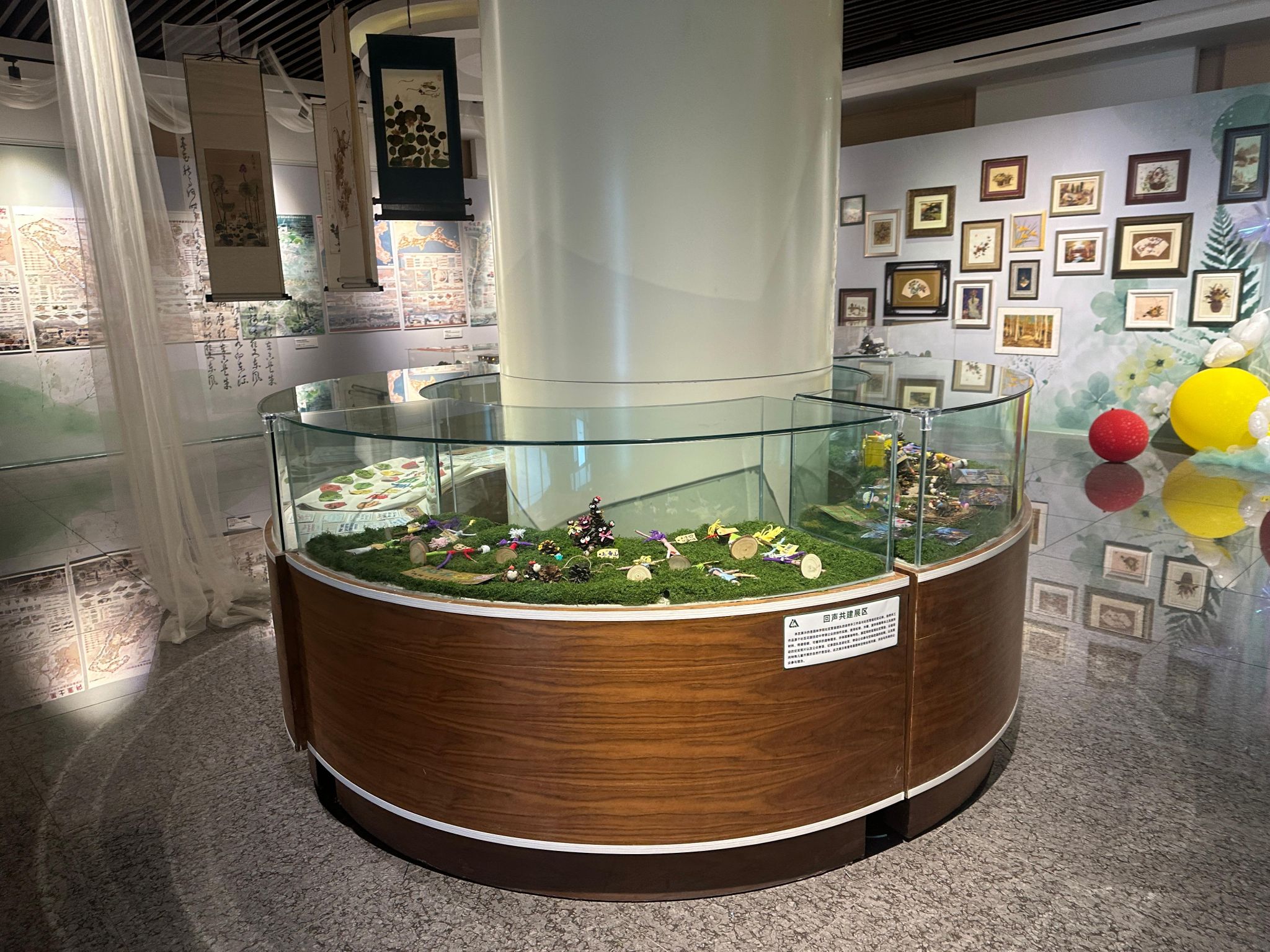
The “Echoes of Co-Creation” section showcases nature-inspired handicrafts and documentary records created by the College’s Community Building Team. The handcrafted works stem from community garden activities that invite the public to engage in creative practices using local and recycled materials, including pinecones, wooden sticks, and discarded cardboard. These works embody principles of sustainability, low-carbon living, and circular resource use while reflecting the characteristics of cold-region environments. The section also displays photographs documenting community-building initiatives, public welfare activities, and participant messages, recording the team’s efforts to engage local communities in spatial improvement projects and nature-based therapeutic activities for children with special needs.
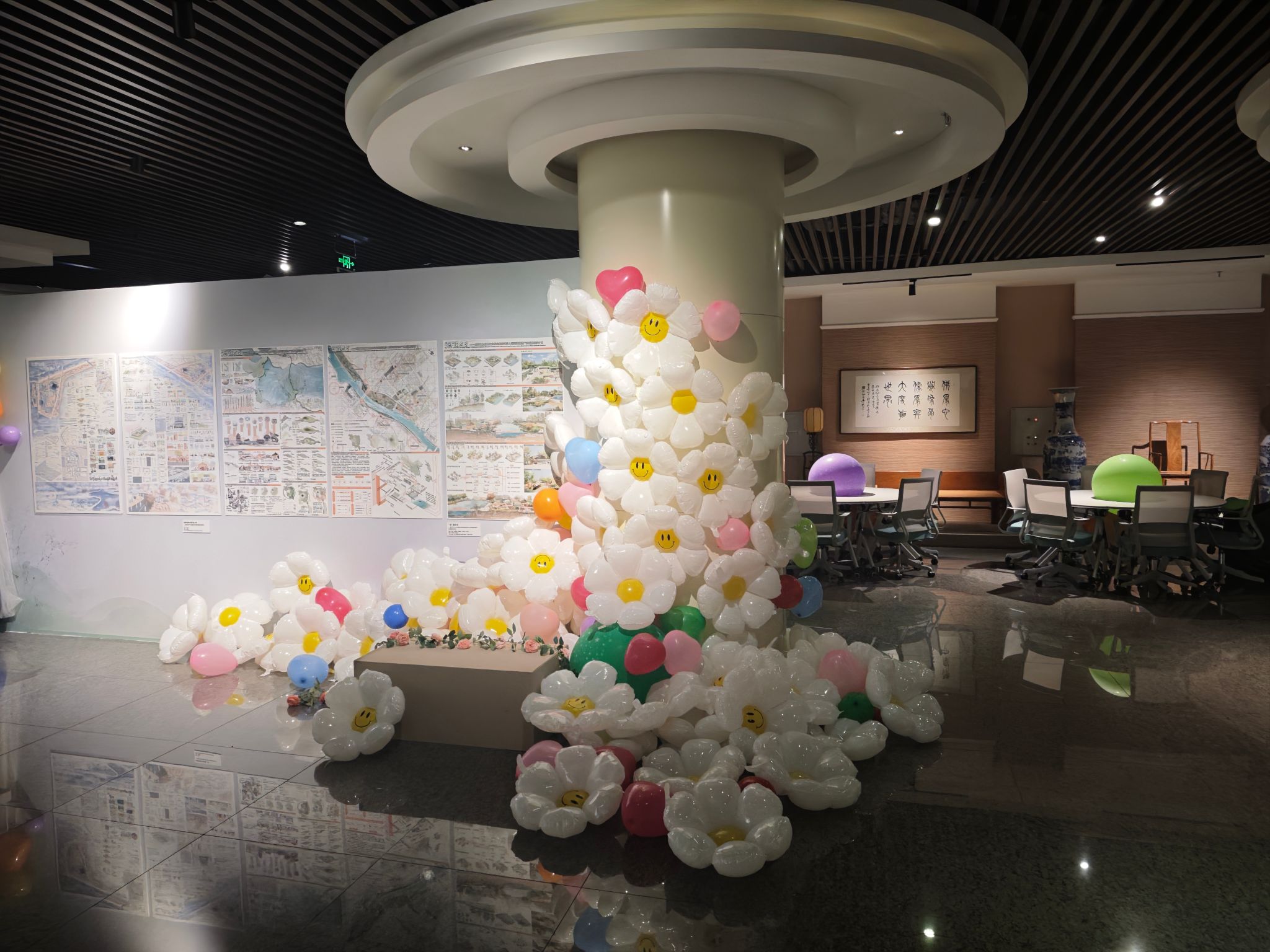
The “Field of Happy Gravity” installation transforms the traditional quiet exhibition environment into a vibrant, pop-art-inspired interactive space. Centered on the universally recognizable smiley-face symbol, the installation uses lightweight balloon materials to create a three-dimensional floral wall that spans the columns and the floor. Colorful balloons emerging from the base resemble lively musical notes, forming a unique “happiness generator” within the exhibition hall. Whether taking a break or playfully interacting with the floral elements, visitors can easily capture dynamic, memorable photographs.
The “Meeting ‘Xiaobo’ Beneath the Umbrellas” area serves as a temporary resting space, where layered oil-paper umbrellas create a poetic atmosphere. When paired with interactive installations, the space functions as both a cultural retreat and an engaging visitor experience. At the lowest point, “Xiaobo” is a playful interactive feature that invites close visitor engagement. Through light-touch interactions, the installation adds an element of surprise and enjoyment to the exhibition experience, transforming the conventional rest area into a lively cultural space and conveying the warmth and vitality of International Museum Day.
Using art as a bridge, this special exhibition connects the campus, nature, and society, telling stories of harmonious coexistence between humanity and the natural world. It offers a vivid interpretation of this year’s International Museum Day theme, “Museums: Bridging Worlds.” Looking ahead, the China (Harbin) Forest Museum will continue to build on its role as a National Forestry and Grassland Science Popularization Base, deepen collaboration with academic colleges and disciplines across the University, and further showcase teaching and research achievements. Through the integration of academic disciplines, museum-based science education, and cultural communication, the Museum will continue to strengthen its support for the University’s teaching, research, and Double First-Class initiative.

 CN
CN