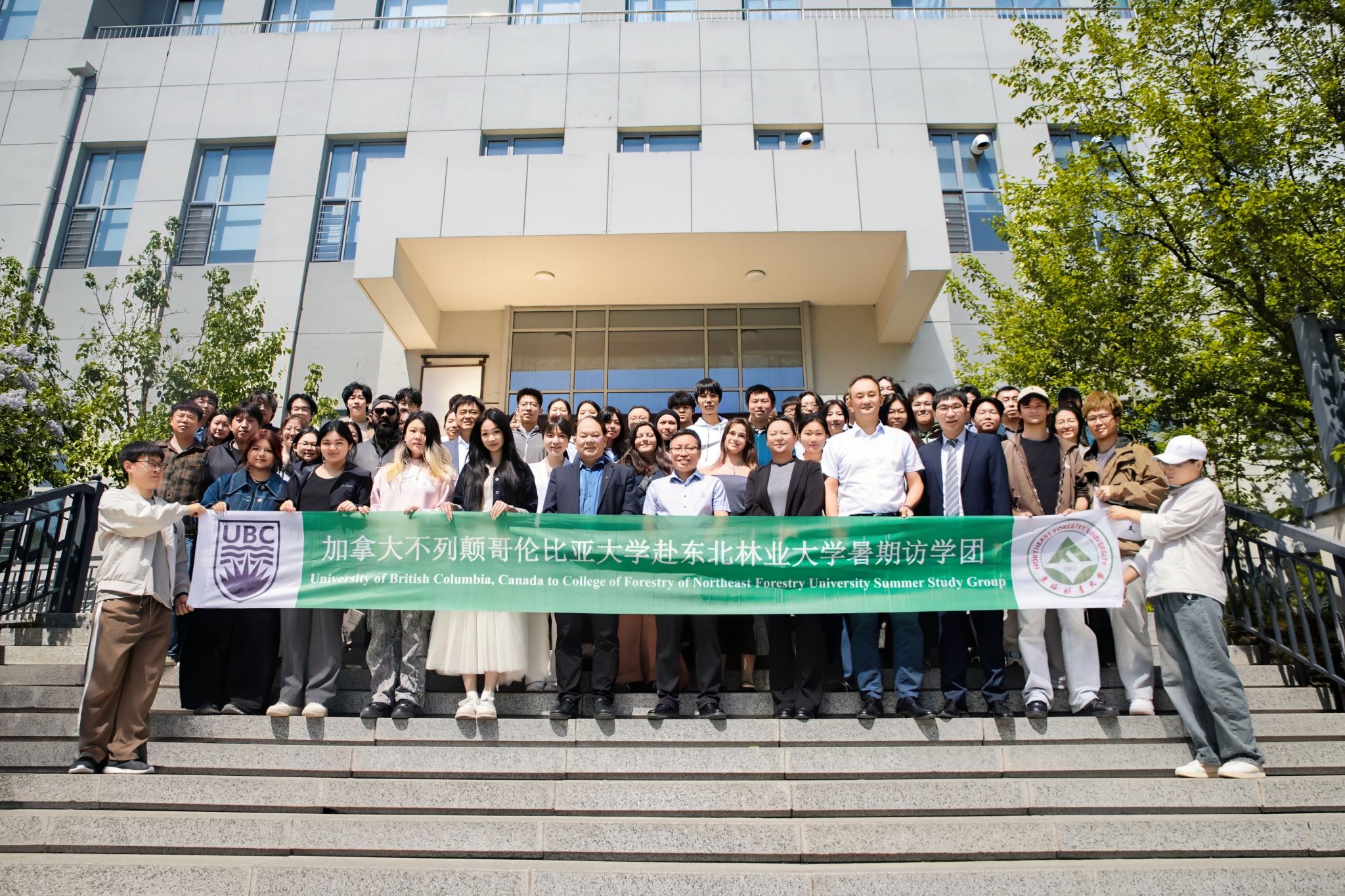
To further implement Xi Jinping Thought on Ecological Civilization, align with China’s “Double First-Class” Initiative, and promote the high-quality internationalization of forestry higher education, NEFU, in collaboration with the University of British Columbia (UBC) in Canada, organized the “UBC Global Seminar: Contemporary Forestry and Conservation in China” international study program from May 5 to 29.
As a flagship initiative advancing NEFU’s high-level international engagement and enhancing its global academic influence in forestry, the program transcended geographical and disciplinary boundaries to establish a professional, in-depth platform for international forestry education and exchange. It also pioneered an integrated ecological field-study network linking northern and southern China. Drawing on NEFU’s main campus, its Hainan Campus, and premier teaching and research bases such as Mao’ershan and Liangshui, the program encompassed both tropical and temperate forest ecosystems, providing participants with comprehensive exposure to China’s diverse forest environments. The initiative represents an important exploration of NEFU’s efforts to internationalize forestry education and cultivate globally competitive forestry professionals. It also exemplifies the proactive role of Chinese forestry universities in contributing to global ecological governance, promoting China’s vision of ecological civilization, and sharing Chinese approaches to sustainable forestry development. By doing so, the program is expected to inject fresh momentum into collaborative global forestry education.
At the opening ceremony, Zhang Peng, Dean of the School of Forestry; Liu Zhiming, Dean of the Hainan International College; and Guangyu Wang, Associate Dean of the Faculty of Forestry at UBC, reviewed the two universities’ longstanding achievements in forestry education, scientific research, innovation, and talent cultivation. They also held in-depth discussions on expanding future cooperation across broader, deeper, and more diversified dimensions.
Academic exchange and mutual learning were central to the program. Throughout the seminar, the two universities convened distinguished faculty to deliver specialized lectures and engage in in-depth academic discussions at the forefront of global forestry development. Key topics included forest ecosystem conservation, intelligent forest management, dynamic forest fire monitoring and prevention, forestry economics and policy, and endangered wildlife conservation. Distinguished scholars from our university, including Dong Lingbo, Huang Yingli, and Cao Yukun, drew on China’s forestry development practices, cutting-edge research, and decades of academic expertise to provide systematic insights into China’s philosophy of green forestry development, scientific approaches to ecological conservation, and the institutional strengths underpinning its forestry governance. These intensive, high-quality academic exchanges effectively bridged differences in perspectives between Chinese and international forestry education and ecological research. They enabled overseas students to gain a comprehensive understanding of China’s achievements and best practices in national park development, biodiversity conservation, natural forest protection, and sustainable forestry, while also providing faculty and students from our university with an excellent platform to engage with international academic frontiers, broaden global perspectives, and strengthen interdisciplinary research and cross-cultural communication skills. The program significantly enhanced NEFU’s international visibility and academic reputation in forestry education and ecological research.
One of the program’s most distinctive features was its immersive, nationwide field-study component. By pioneering an integrated north-south field-learning model, the program linked representative ecological landscapes—including Hainan’s tropical rainforests and mangrove wetlands, as well as Northeast China’s pristine Korean pine forests and temperate ecosystems. Through firsthand observation of real-world conservation practices, participants gained direct insight into China’s remarkable achievements in ecological protection, ecosystem restoration, and integrated environmental governance, while experiencing the practical philosophy, development pathways, and governance outcomes of China’s ecological civilization.
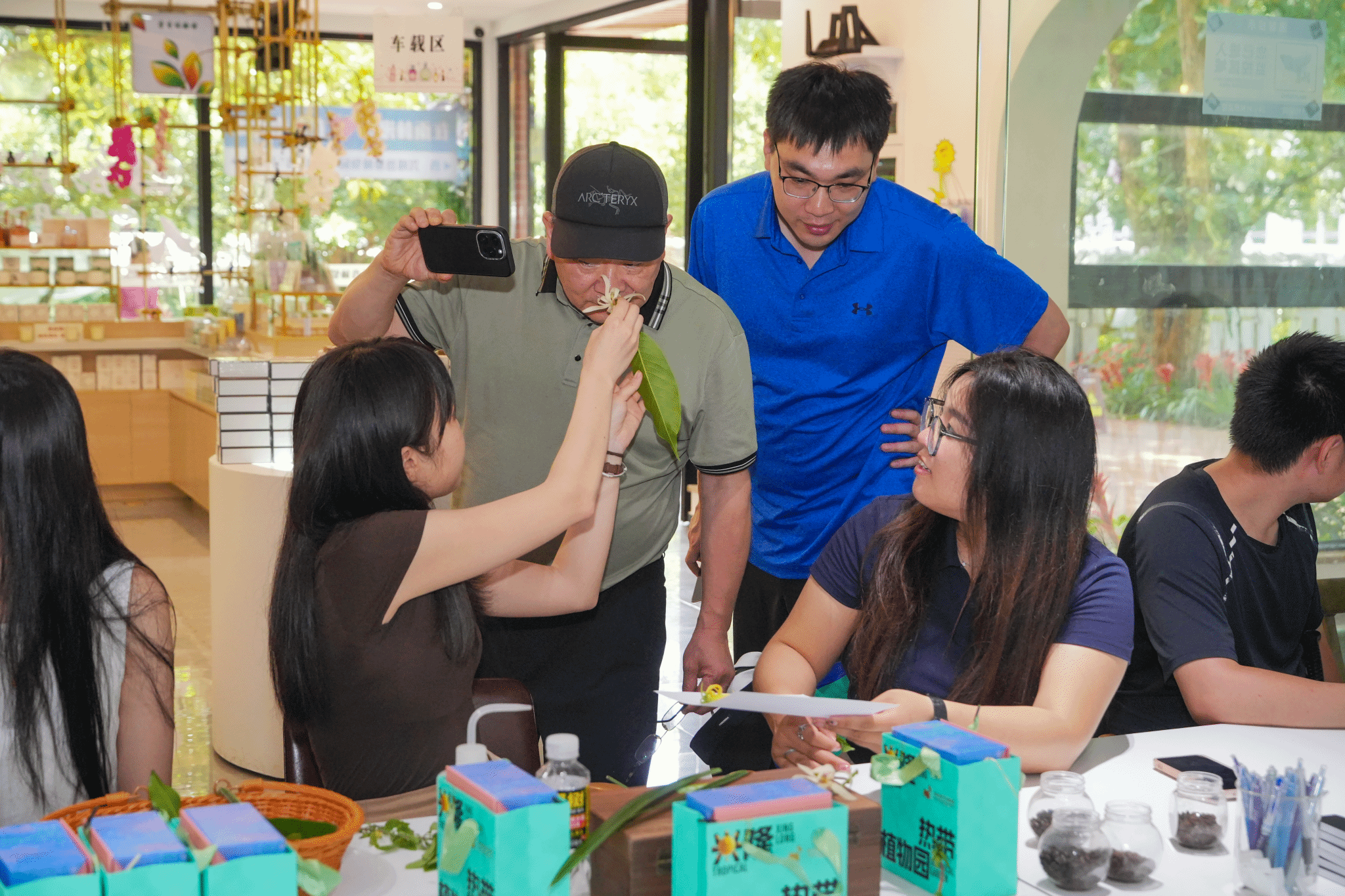
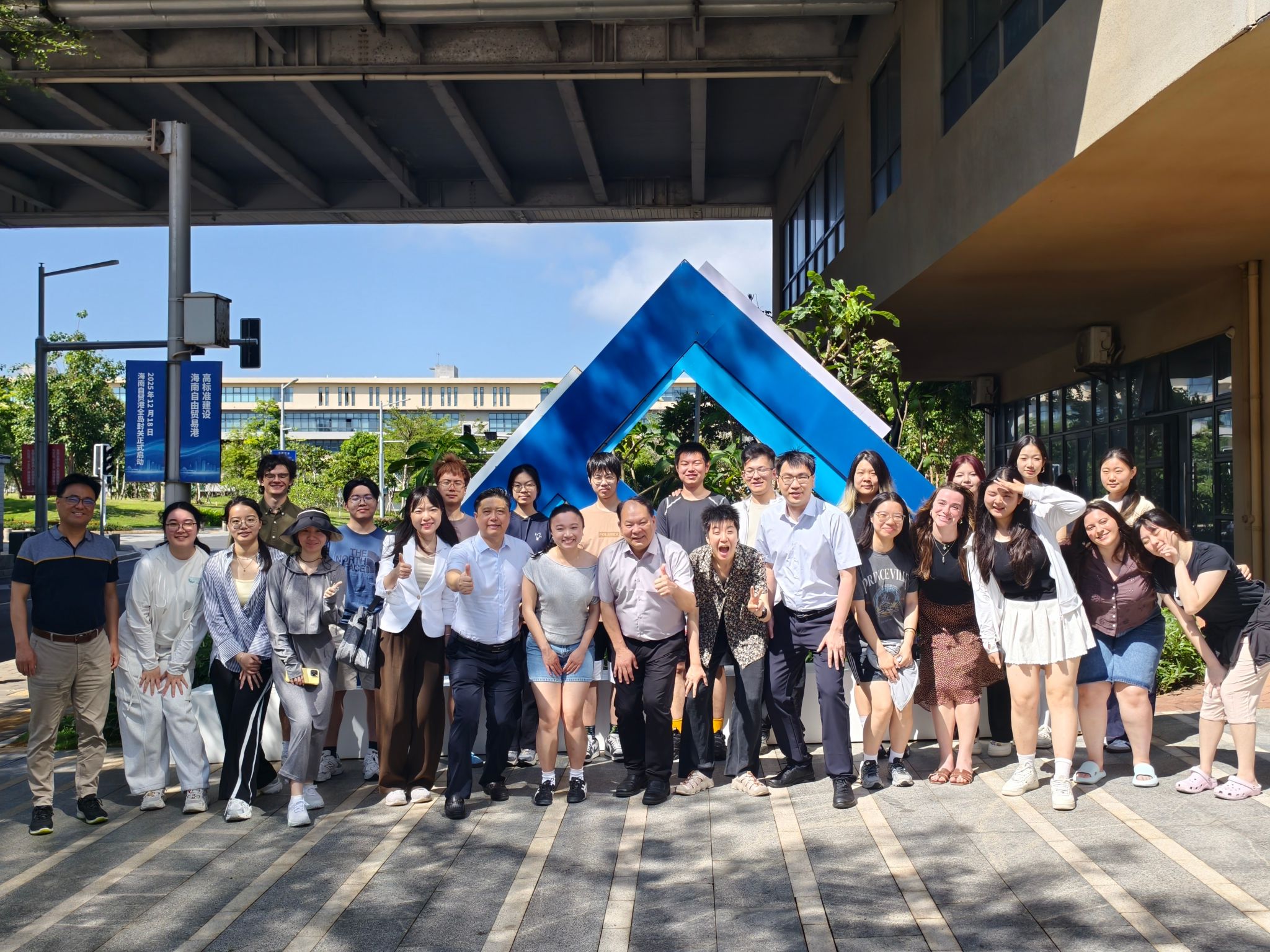
During the Hainan segment of the program, Chinese and international participants visited several key ecological sites, including the Yanoda Rainforest Cultural Tourism Zone, Wuzhishan National Park, and Lingshui Mangrove Wetland Park. They conducted in-depth studies of tropical ecosystem conservation, the sustainable use of unique plant resources, and coastal wetland restoration. The group also visited Maona Village, where they observed the successful integration of ecological conservation, preservation of ethnic minority intangible cultural heritage, and rural revitalization, gaining firsthand appreciation for China’s coordinated approach to environmental protection, cultural preservation, and community development.
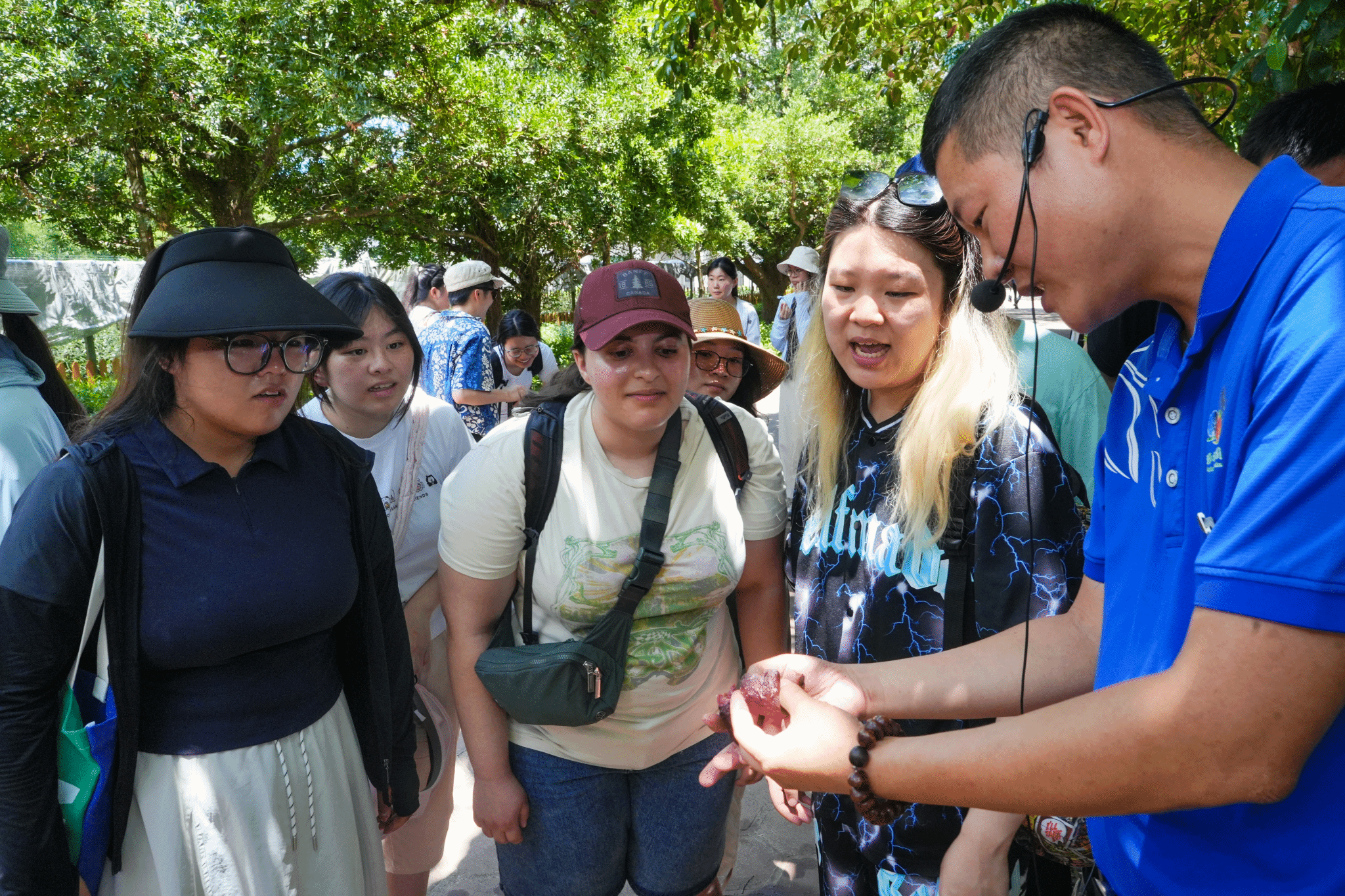
During the Heilongjiang segment, participants conducted field investigations at NEFU’s Mao’ershan Experimental Forest, the Liangshui National Nature Reserve, and the Northeast China Tiger and Leopard National Park, examining scientific management of temperate forests, habitat conservation for endangered wildlife, and natural forest restoration. Focusing on the transformation of China’s state-owned forest regions, participants observed how Heilongjiang’s forestry sector has responded to the challenge of redefining its development model by moving beyond the traditional timber-oriented economy toward diversified green industries, including ecological conservation, ecotourism, forest-based economies, and forest wellness. These firsthand observations provided valuable insights into China’s successful transition to sustainable forest management.
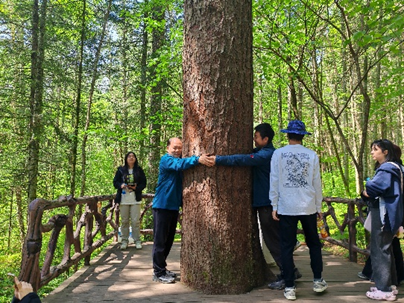
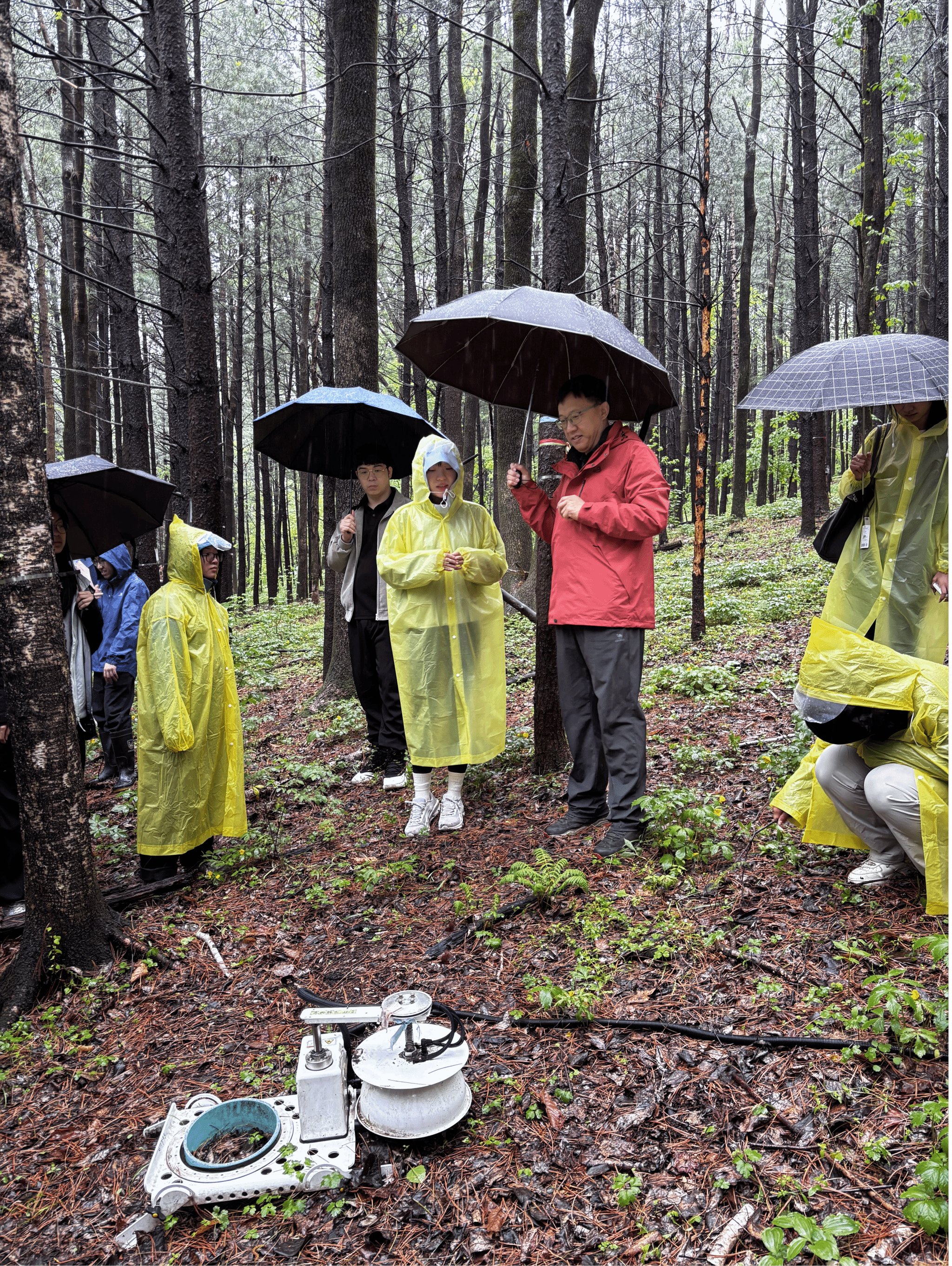
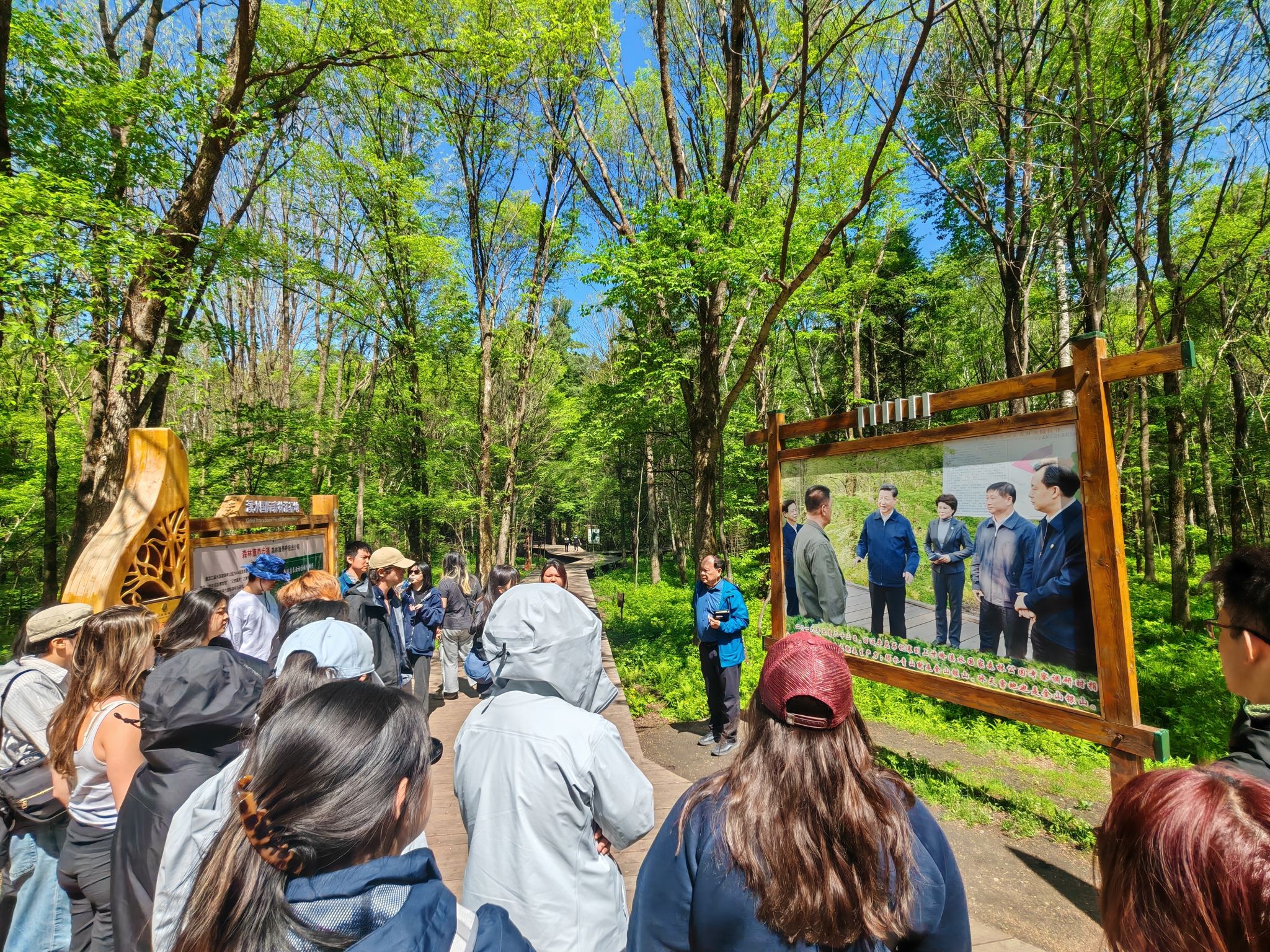
Throughout the field study, Chinese and international students combined learning with reflection and practice. They engaged in presentations and discussions on topics such as forest resource conservation, national park governance, ecological civilization, and multicultural exchange. Students from UBC noted that the journey—from the tropical rainforests of southern China to the Korean pine forests of the northeast—offered a multidimensional understanding of a dynamic, rapidly developing China. They were deeply impressed by the tangible achievements of China’s ecological civilization and its rich cultural heritage, describing the experience as rewarding and inspiring. Many expressed a desire to continue participating in future exchange programs between the two universities to strengthen international academic collaboration further. Students from our university likewise experienced significant personal and academic growth through these two-way exchanges. Their international outlook broadened considerably, and their cross-cultural communication skills and understanding of global ecological governance were greatly enhanced. The program further strengthened their commitment to advancing forestry science, fulfilling ecological responsibilities, serving national priorities, and contributing to China's ecological civilization.
The closing ceremony was attended by Zhang Peng, Dean of the School of Forestry; Yang Bingyu, Deputy Party Secretary; Jiang Yang, Vice Dean; Hu Tongxin, Vice Dean; Guangyu Wang, Associate Dean of the Faculty of Forestry at UBC; and faculty representatives from both institutions. Professor Guangyu Wang expressed sincere appreciation for NEFU’s meticulous organization, thoughtful arrangements, and warm hospitality, and commended the program’s academic quality and educational impact.
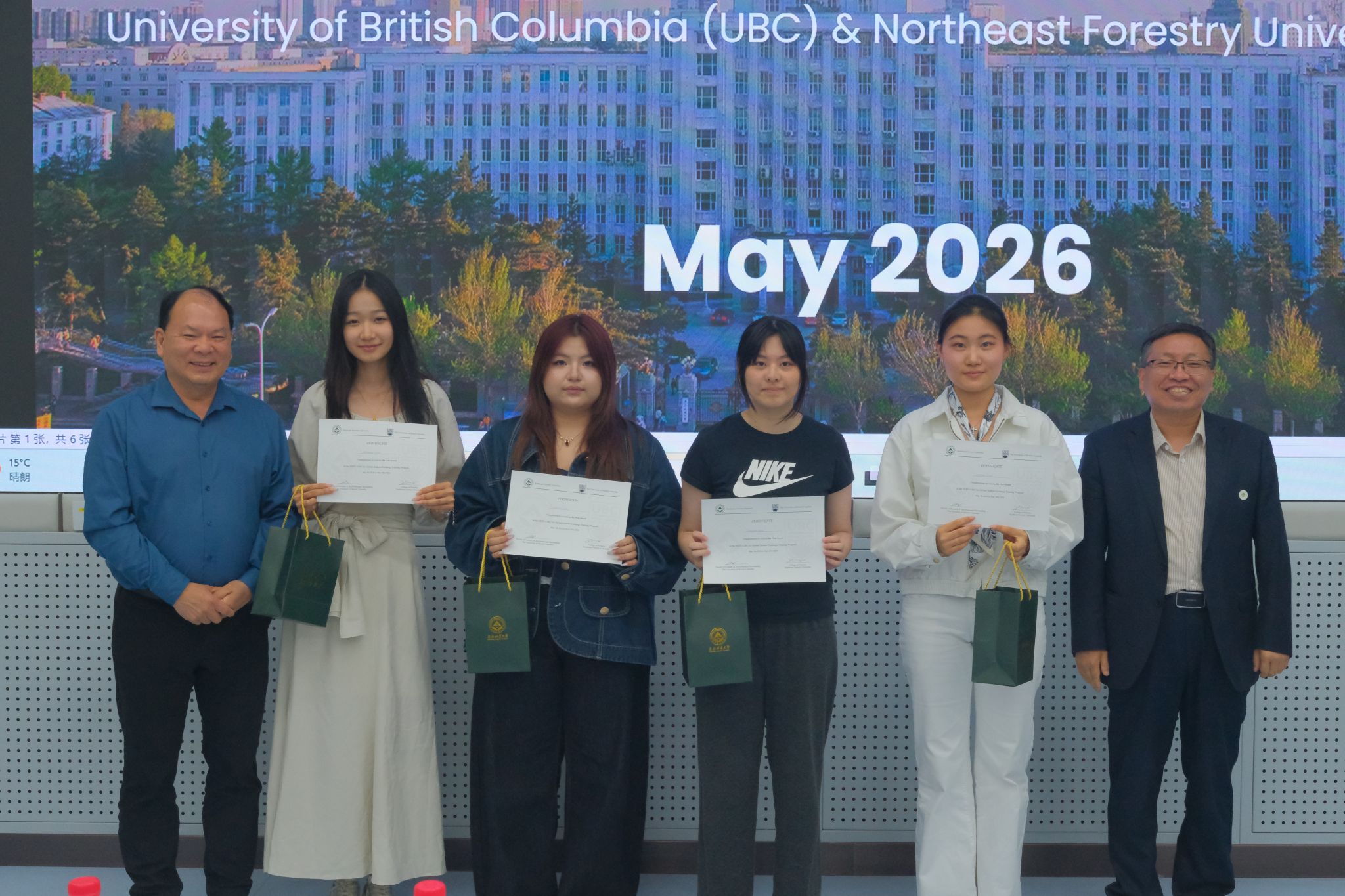
Closing Ceremony
Dean Zhang Peng emphasized that the program was not only a journey of professional learning, ecological exploration, and cultural exchange but also an important milestone in deepening cooperation between the two universities, strengthening mutual understanding, and jointly safeguarding the natural environment. He encouraged young forestry students from China and Canada to continue learning from one another, grow together, and work collectively toward a greener, more sustainable future.
International collaboration is a cornerstone of NEFU’s Double First-Class initiative and a vital pathway for aligning forestry disciplines with global academic frontiers and achieving high-quality development. In recent years, NEFU has continually expanded its international partnership network and steadily advanced the internationalization of faculty development, curriculum design, scientific research, and talent cultivation. The joint UBC field-study program is an innovative model for cultivating internationally competitive forestry professionals. It has strengthened students’ global competence and cross-cultural communication skills, promoted alignment of NEFU’s forestry disciplines with international standards, and identified areas for further development. The program has injected strong momentum into improving disciplinary quality and enhancing NEFU’s global competitiveness.
Looking ahead, NEFU will continue to deepen practical cooperation with world-leading institutions, including the University of British Columbia, to advance international exchange, collaborative research, and talent development. By sharing its expertise, educational philosophy, and innovative approaches, our university will continue to contribute Chinese wisdom and solutions to global sustainable forestry and help build a harmonious future where humanity and nature coexist in balance.

 CN
CN