Recently, the winners of the “Garden” Cup Plant Landscape Design Competition were officially announced. A graduate team in Landscape Architecture from Northeast Forestry University (NEFU), supervised by Li Wen and Shi Song and led by Xian Xue, with team members Fu Ting, Yan Mingqi, Ma Chenxu, and Bai Shuyu, distinguished itself among more than one hundred university teams nationwide with an innovative and comprehensive design proposal, earning First Prize.
The Garden Cup is one of China’s most prestigious academic competitions in landscape architecture, attracting students from leading universities across the country in agriculture, forestry, and architecture. The judging panel, composed of university professors and practicing landscape designers, evaluates entries based on criteria including site analysis, theoretical innovation, ecological feasibility, cultural expression, and final presentation. The competition is known for its intense rivalry and rigorous evaluation standards.
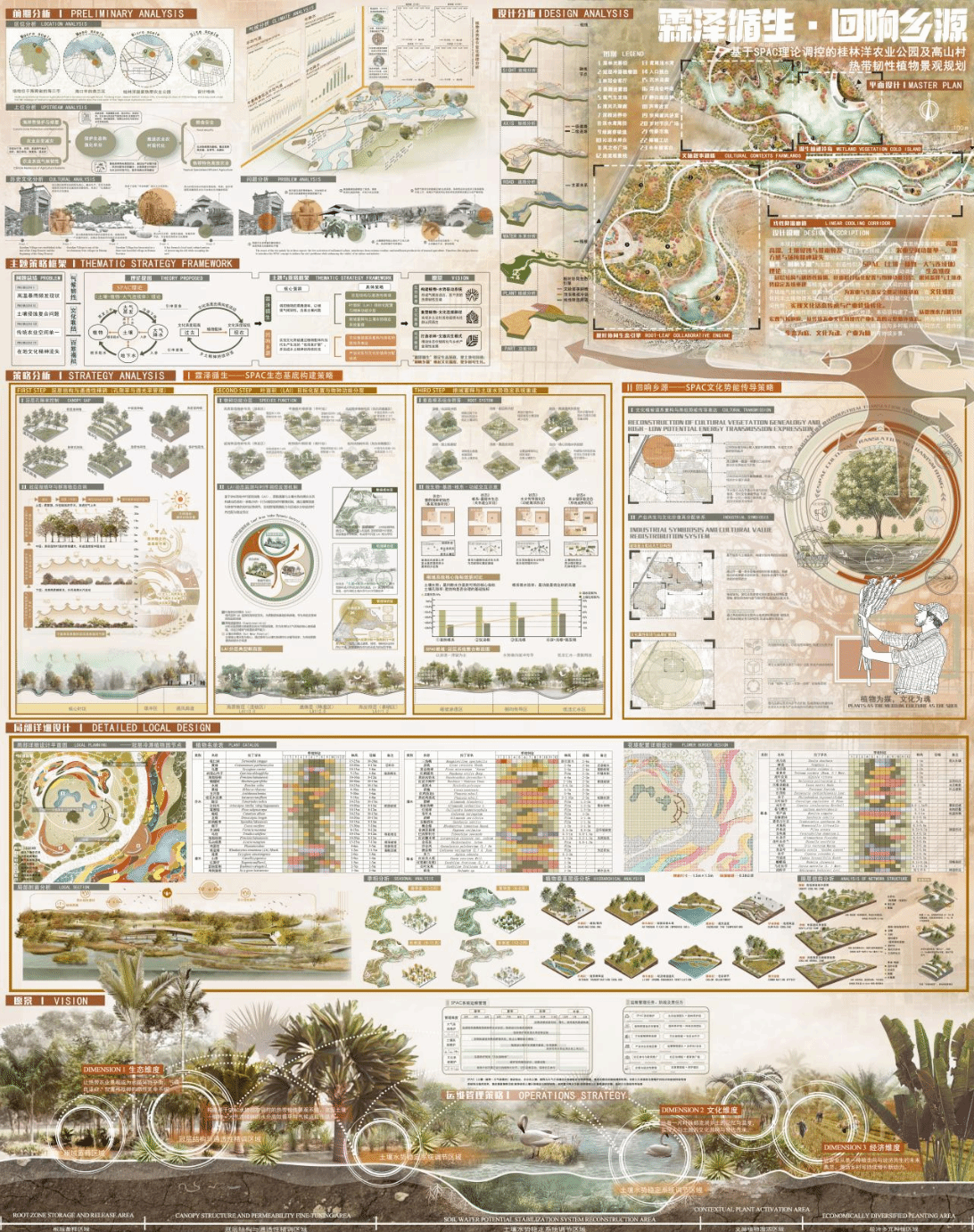
The team’s award-winning project, Echoes of Rural Origins: A Cyclical Landscape of Water and Life, focuses on Guilinyang Agricultural Park and Gaoshan Village in Hainan Province. Addressing practical challenges such as mitigating the tropical urban heat island effect and preserving traditional farming culture, the proposal creatively applies the Soil–Plant–Atmosphere Continuum (SPAC) theory as the core framework for landscape planning and design. The design establishes a resilient tropical plant ecosystem through three key strategies: improving atmospheric ventilation and cooling, optimizing plant communities, and enhancing soil water conservation. At the same time, it explores local agricultural vegetation culture to develop an integrated planning approach that combines ecological restoration, cultural heritage preservation, and the coordinated development of agriculture, culture, and tourism, balancing ecological sustainability, local identity, and rural economic revitalization.
During the final presentation, the team’s lead presenter, Xian Xue, delivered a clear, well-structured, and confident defense of the project, systematically explaining the site’s challenges, the design’s core strategies, detailed node planning, and the long-term vision. By moving beyond conventional approaches to rural landscape design and demonstrating both theoretical innovation and strong practical feasibility, the proposal earned unanimous recognition and high praise from the judging panel.
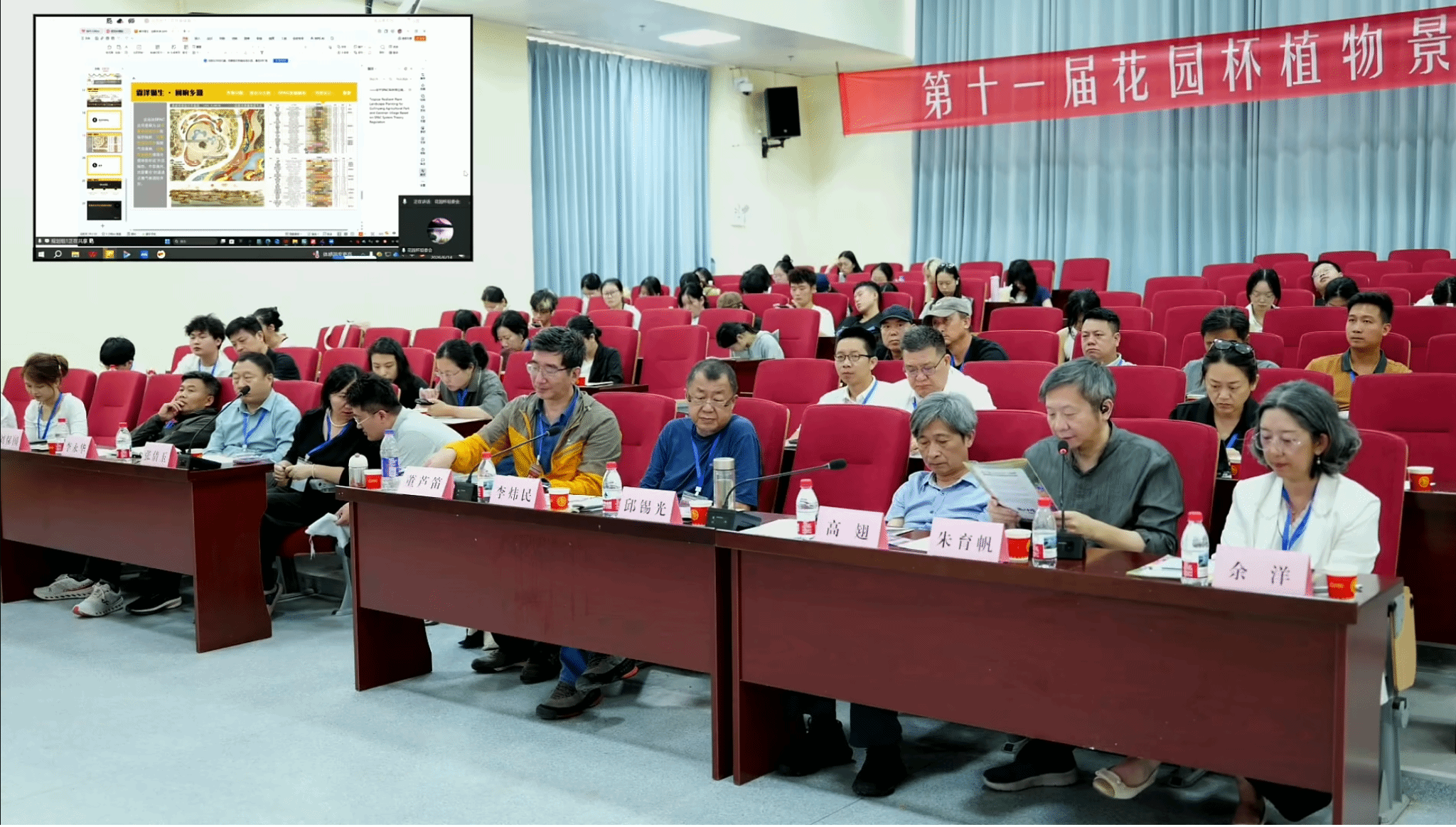
Photo: Final presentation and defense session.

 CN
CN