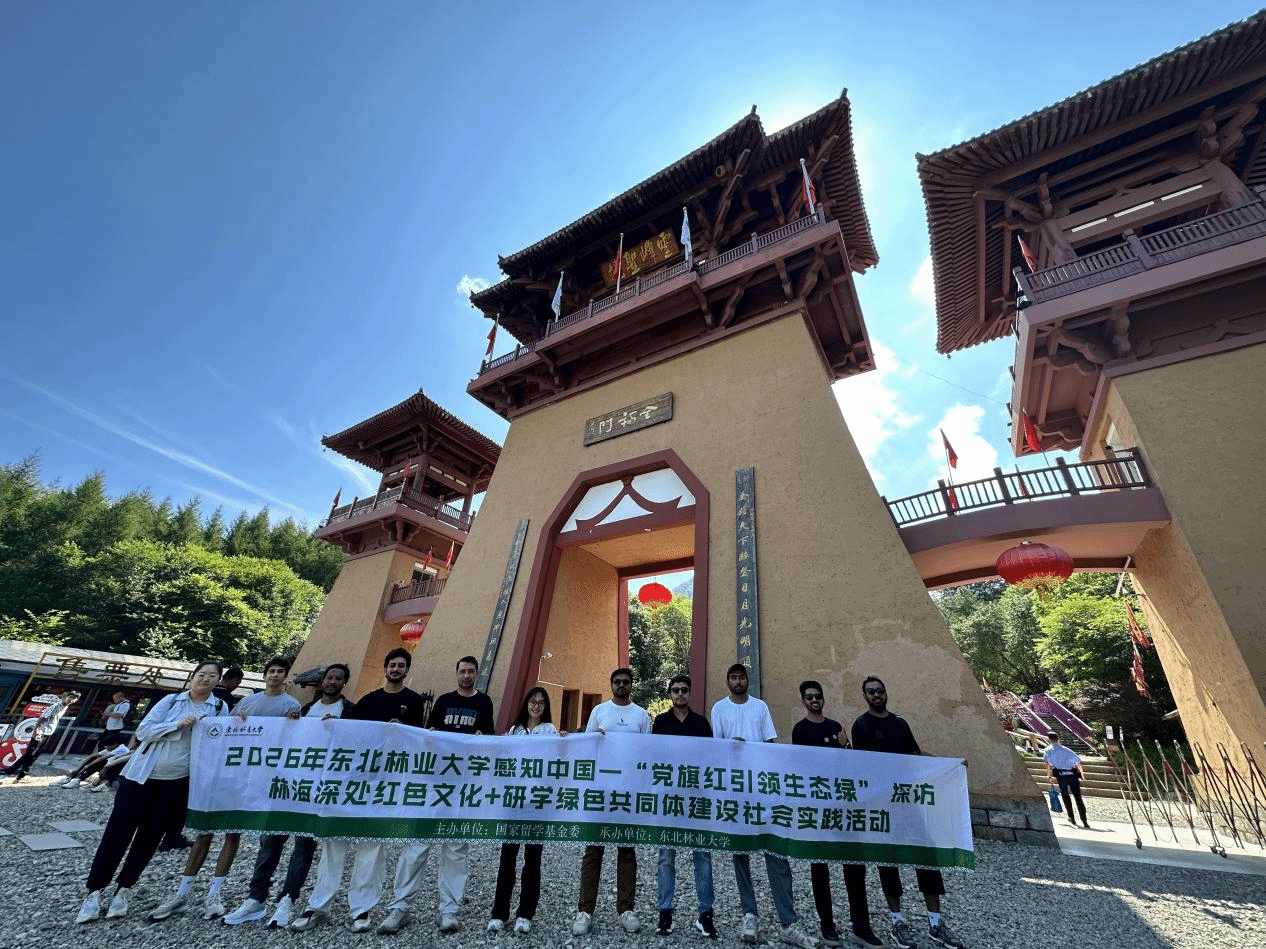
On July 20, international students from Vietnam, Pakistan, Bangladesh, and other countries visited the Mao’ershan Experimental Forest Farm, a designated “Experiencing China” practice base of our university, and Yuanbao Town in Shangzhi City. They participated in the “Experiencing China” social practice and cultural immersion program.
An Ecology Classroom and Revolutionary Heritage Deep in the Forest
On the morning of the event, the international students participated in science education activities and experiential learning programs at the forest farm. They climbed Mao’ershan Mountain and visited the teaching and internship exhibition hall. Accompanying faculty members provided systematic explanations, drawing on the characteristics of Northeast China’s natural secondary forests and the ecological functions, biodiversity, and conservation achievements of Korean pine–broad-leaved forests at their climax stage. Their presentations offered vivid examples of how the principle that “lucid waters and lush mountains are invaluable assets” has been translated into concrete practices in forested regions.
“Behind these magnificent forests lies the decades-long dedication of Chinese forestry researchers and forest workers. This has given me a completely new understanding of the concept of ‘sustainable development.’” Huang Wenqi, an international student from Vietnam, remarked while climbing Maoershan Mountain. Through this immersive experience, the international students gained a deeper understanding of the systematic, scientific approach underpinning China’s ecological civilization. They also experienced firsthand the institutional strengths that have enabled ecological conservation and green development to advance in close alignment under CPC leadership.
From Land Reform to Rural Revitalization
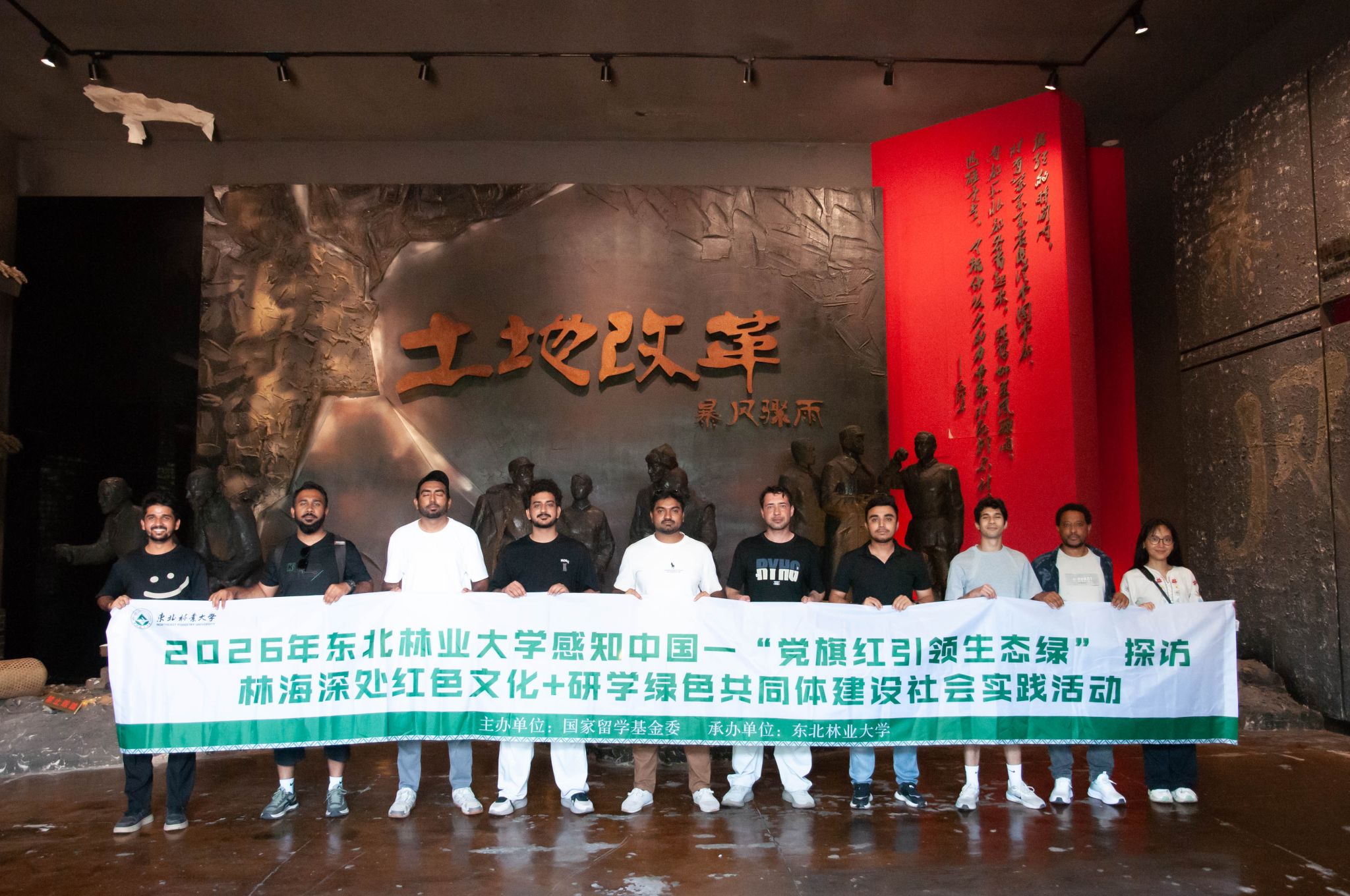
In the afternoon, the international students visited Yuanbao Village in Yuanbao Town, Shangzhi City, known as “China’s first village of land reform,” and toured the Violent Storm Memorial Hall. Through rare historical materials and reconstructed scenes, the museum recounts the revolutionary transformation led by the Communist Party of China in 1946, when the land reform movement ended the centuries-old feudal landownership system. The renowned writer Zhou Libo based his celebrated novel The Violent Storm on these events, helping establish Yuanbao Village as an important landmark in China’s revolutionary heritage.
Learning Through Exchange and Strengthening Understanding of China
The program fully leveraged the “Study in Longjiang” consortium’s resource-integration strengths, organically combining exploration of revolutionary heritage with ecological field study. In doing so, it created a new model of national-conditions education that enables international students to experience, engage with, and reflect on China. Through the intersection of history and nature, the students gained a vivid, multidimensional understanding of China’s development—from the revolutionary era to the new era—and of the perseverance and resilience that have shaped this transformation.
Looking ahead, our university will continue to strengthen the “Experiencing China” brand, guided by the theme “Red Party Flags Guiding Green Ecological Development.” It will regularly offer practical learning programs that integrate revolutionary culture and ecological education, aiming to cultivate more high-level professionals who understand and are friendly toward China, and who possess both a strong commitment to ecological conservation and a global perspective. Our university will continue to share with the world compelling stories of how harmony between humanity and nature is being advanced throughout China’s journey toward modernization.

 CN
CN