Recently, an award for Gender Mainstreaming in PPR Eradication, established by the Food and Agriculture Organization of the United Nations (FAO), has reached the stage of signing the funding agreement. Following consecutive awards in 2023 and 2024, a team of doctoral students from NEFU received the award again in 2025. This achievement further enhances the university’s international impact in related fields and demonstrates solid progress in cultivating high-level innovative talent through research platforms.
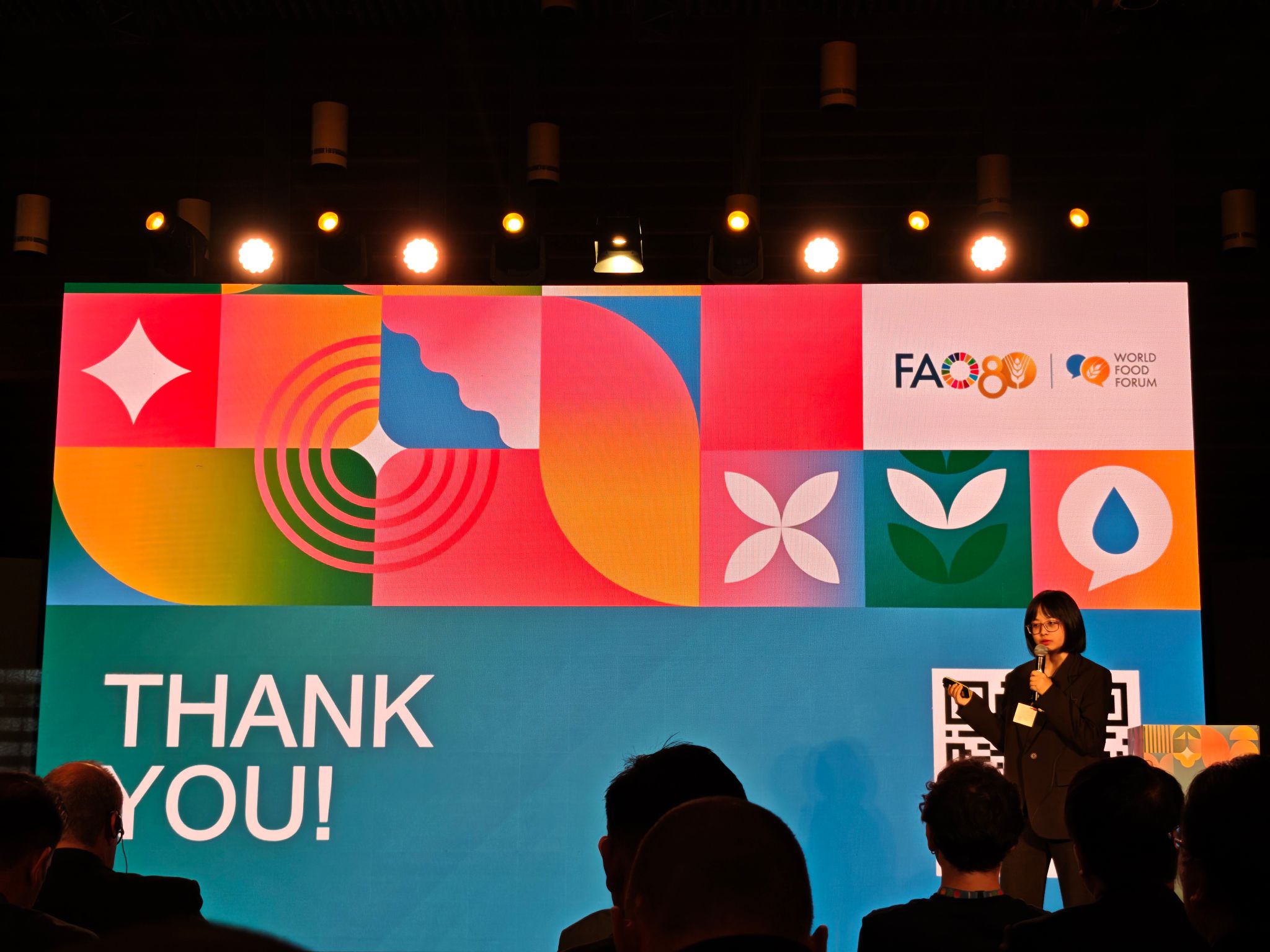
Doctoral student Lin Yao presents her research at an FAO event.
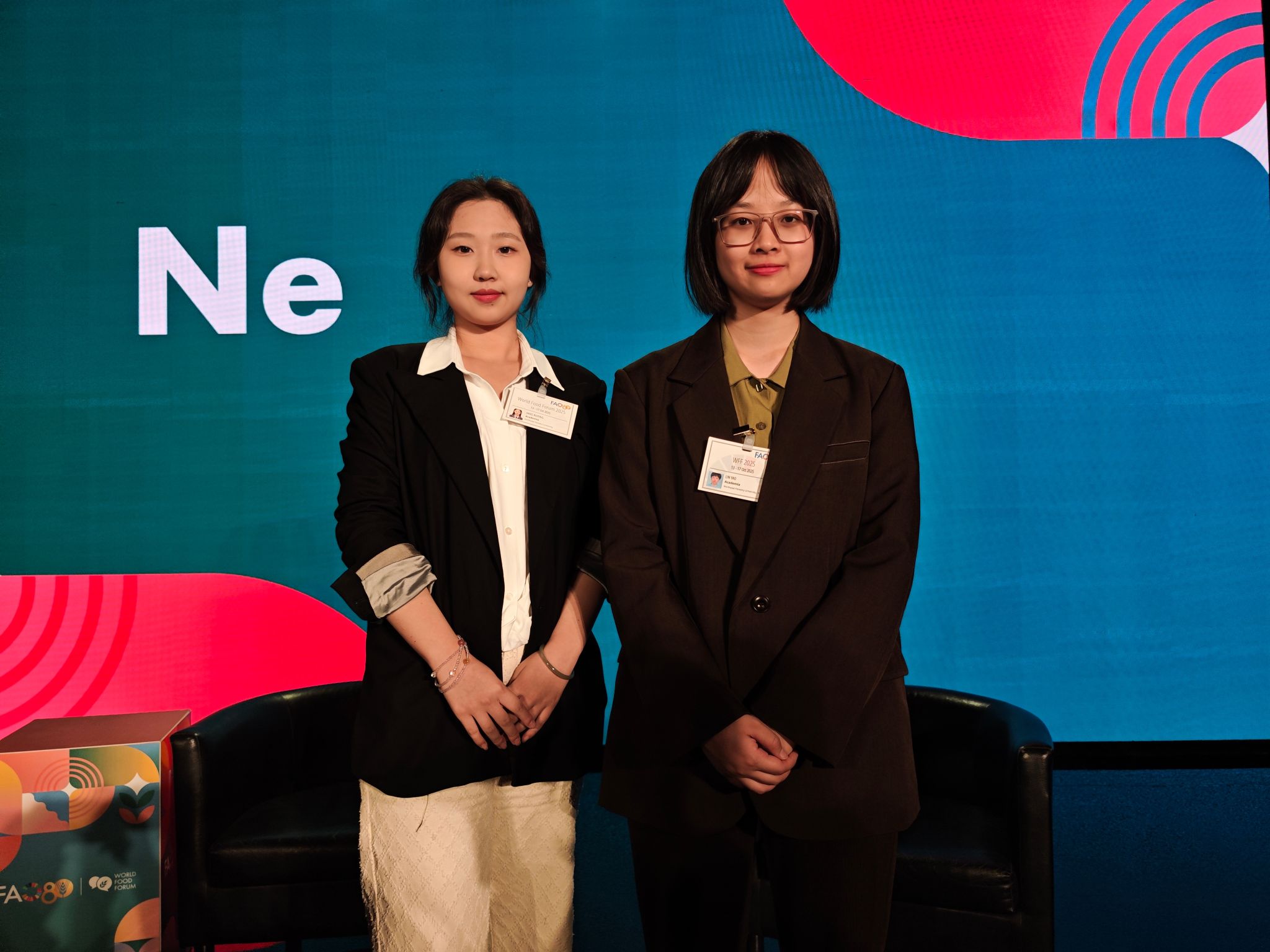
NEFU graduate students Lin Yao (right) and Jiang Ruiying (left) pose for a photo at FAO headquarters during the event.
Over the years, NEFU has focused on key areas, including the surveillance and control of wildlife-borne infectious diseases and the management of biosafety risks. Supported by the Heilongjiang Provincial Key Laboratory for Wildlife-borne Infectious Diseases and Biosafety Control, the university has integrated research tasks throughout graduate training. It has consistently organized and guided graduate students to study disease transmission risks at the human-livestock-wildlife interface in pastoral areas of the Qinghai-Tibet Plateau, thereby steadily enhancing young researchers’ interdisciplinary research capabilities and international collaboration skills.
The student research project associated with this award addresses key needs in the prevention and control of major animal diseases through interdisciplinary research. Focusing on women’s participation, animal disease prevention and control, public health, biosafety, and rural development, the project examines practical challenges and critical aspects of grassroots disease prevention in pastoral areas. Incorporating “gender mainstreaming” into research on the eradication of Peste des Petits Ruminants (PPR) is important because, in many pastoral regions and small-ruminant production systems, women have long been involved in livestock care, herding assistance, water collection, and daily management. They therefore play a crucial role in grassroots disease prevention and early disease detection. Paying attention to this issue helps better recognize and leverage the role of women in disease control, enabling prevention measures to be more closely aligned with local production and living conditions and improving the effectiveness of monitoring and early warning, immunization interventions, and community-level disease control.
NEFU student teams have won FAO-related awards for three consecutive years, demonstrating sustained innovation in animal disease prevention and biosafety research, as well as the university’s significant progress in cultivating high-level talent, strengthening international cooperation, and developing young research teams.


 CN
CN